
Preparedness Is Community Care: Building Safety Before an Emergency Happens
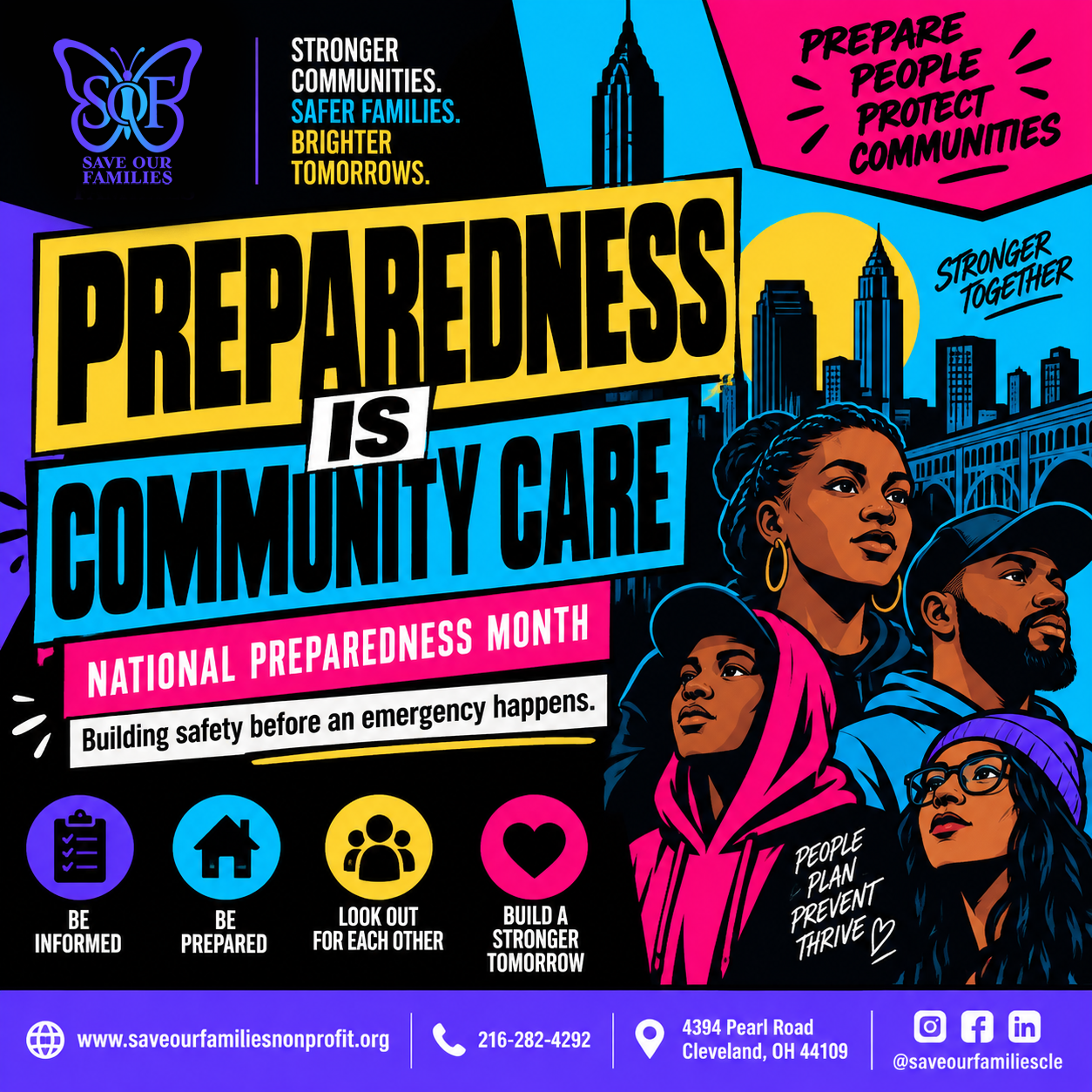
Preparedness Is Community Care: Building Safety Before an Emergency Happens
Every September, National Preparedness Month calls attention to a simple but consequential truth: emergencies rarely provide enough time to begin planning after they arrive. Severe weather, power outages, fires, public health emergencies, transportation disruptions, household crises, and other unexpected events can quickly interrupt access to food, medicine, communication, shelter, transportation, and health care.
Preparedness, however, should not be reduced to purchasing an expensive emergency kit or creating a checklist that assumes every household has the same resources. A person’s ability to prepare is shaped by income, housing stability, disability, health status, transportation, social support, language access, neighborhood infrastructure, and many other conditions. A household cannot store weeks of supplies if it is already struggling to afford groceries. A person who relies on electrically powered medical equipment needs a different plan than someone who does not. A resident without a vehicle may not be able to follow an evacuation plan designed around driving.
For Save Our Families, preparedness is an extension of community care. It means helping people identify risks, develop practical plans, protect their health, and build relationships that make it less likely for anyone to face an emergency alone.
Preparedness Must Be Practical, Inclusive, and Community-Based
Traditional preparedness messages often focus on individual responsibility: build a kit, make a plan, and stay informed. These steps matter, but they are only part of the picture. Individual preparation is strongest when it is supported by reliable public systems, accessible information, trusted organizations, and networks of neighbors who can help one another.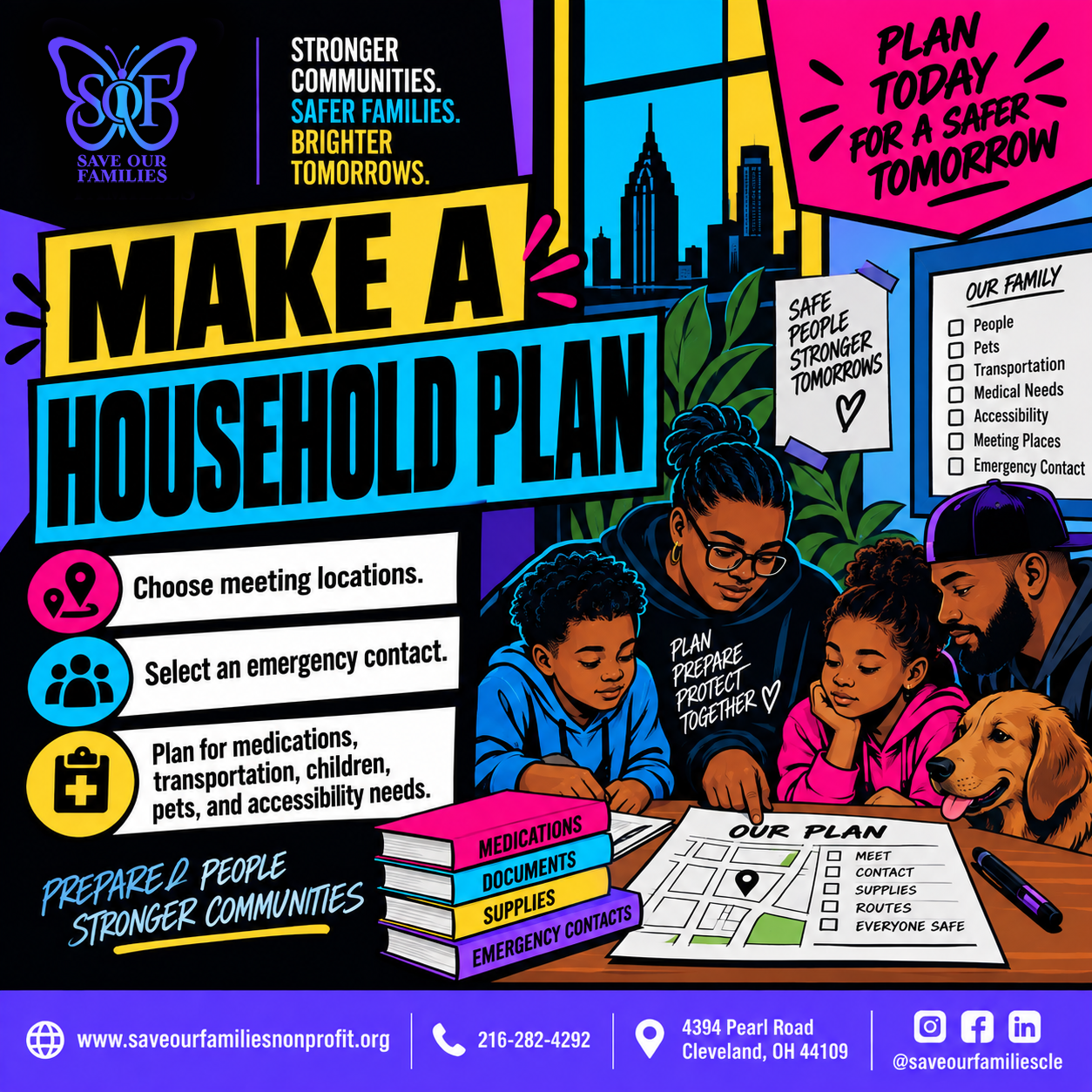
Emergencies do not affect every community equally. People with lower incomes, older adults, people with disabilities, individuals experiencing homelessness, families without reliable transportation, people who use substances, and those managing chronic health conditions may face greater barriers before, during, and after a crisis. Preparedness efforts that ignore these realities can unintentionally place responsibility on people without addressing the conditions that limit their choices.
An equitable approach asks broader questions:
- Who may not receive an emergency alert?
- Who needs transportation assistance?
- Who depends on refrigerated medicine or powered medical equipment?
- Who may be unable to afford extra food, water, batteries, or medications?
- Who could experience withdrawal, overdose risk, or interrupted treatment during a disruption?
- Who may avoid shelters or emergency services because of stigma, discrimination, safety concerns, documentation status, or previous negative experiences?
- Who in the neighborhood is likely to become isolated?
Preparedness becomes meaningful when communities plan around the people most likely to be overlooked.
Understand the Emergencies Most Likely to Affect Your Household
Preparedness does not require planning for every imaginable disaster at once. Begin with the emergencies most likely to occur where you live and the disruptions that would have the greatest effect on your household.
In Northeast Ohio, those concerns may include:
- Severe thunderstorms and damaging winds
- Tornadoes
- Flooding and flash flooding
- Winter storms and extreme cold
- Extreme heat
- Fires
- Extended power or utility outages
- Poor air quality
- Public health emergencies
- Transportation interruptions
- Household medical or behavioral health crises
Consider what each event could interrupt. A storm may cause a power outage, but the consequences of that outage will differ across households. One family may lose refrigerated food. Another may lose access to oxygen equipment, medication refrigeration, an elevator, internet-based communication, or the ability to charge a mobility device.
Effective preparedness begins with consequences, not only hazards. Ask what would happen if your household lost electricity, water, transportation, internet access, or access to stores and pharmacies for several days.
Create a Household Emergency Plan
An emergency plan should be short enough to remember and detailed enough to use under stress. Every person in the household should understand the plan, including children when developmentally appropriate.
Choose two meeting locations
Identify one location immediately outside the home and another outside the neighborhood. The first can be used during a fire or building evacuation. The second can be used when household members cannot safely return to the area.
Select an out-of-area contact
Local telephone systems may become overloaded during a large emergency. Choose a trusted person outside the immediate area who can receive updates from household members. Make sure everyone has that person’s telephone number written down, not only stored in a phone.
Plan for different times of day
Household members may be at work, school, medical appointments, community programs, or other locations when an emergency begins. Discuss who is responsible for children, older relatives, pets, medications, medical supplies, and transportation.
Know the difference between sheltering and evacuating
Some emergencies require people to remain indoors. Others require immediate evacuation. Identify a safe interior location away from windows for severe weather, know the exits from your home, and determine where you could stay if you had to leave temporarily.
Practice the plan
A plan that has never been discussed or practiced may be difficult to follow during a crisis. Review it at least twice a year and whenever there is a change in household members, health needs, medications, transportation, or contact information.
Build an Emergency Supply Kit Gradually
Federal preparedness guidance recommends keeping enough supplies to support household members for several days after a disaster (Federal Emergency Management Agency [FEMA], 2026a).
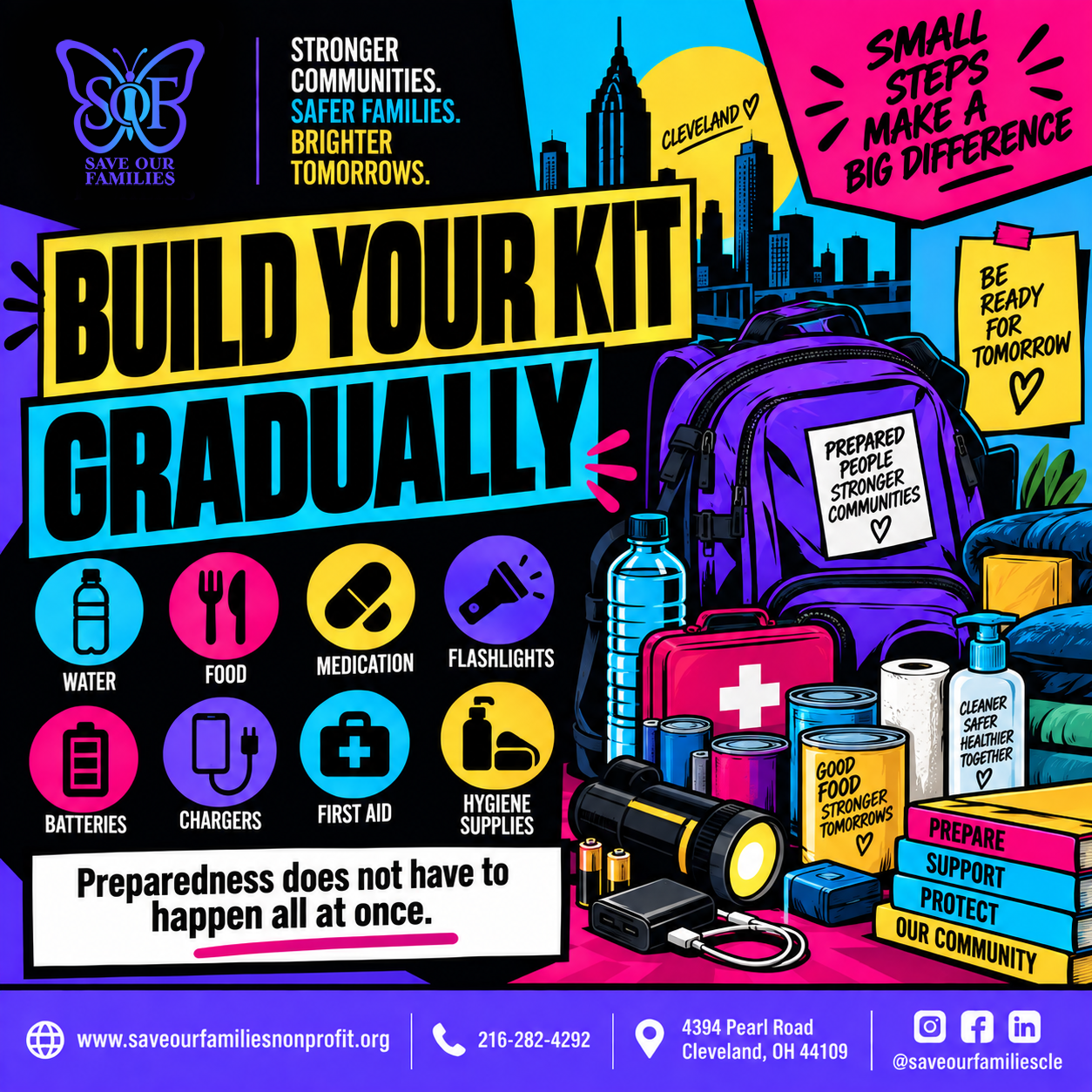
The Centers for Disease Control and Prevention (CDC, 2024) also emphasizes that emergency supplies should reflect each person’s physical, mental, emotional, and medical needs.
Preparedness does not have to happen through one large purchase. Add one or two items during regular shopping trips, request supplies through community programs, and reuse safe containers or bags already available in the home.
A basic household kit may include:
Water and food
- Water for drinking, hygiene, and food preparation
- Shelf-stable foods that do not require refrigeration
- A manual can opener
- Food that reflects allergies, medical conditions, cultural preferences, and sensory needs
- Infant formula, baby food, or nutrition drinks when needed
- Food and water for pets
Light, communication, and power
- Flashlights
- Extra batteries
- Battery-powered or hand-crank radio
- Portable phone chargers or power banks
- Charging cables
- A whistle for signaling
- A written list of emergency contacts
- Printed local maps
Candles can create an additional fire hazard and should not be the primary source of emergency lighting.
Health and first aid supplies
- Prescription medications
- A current medication list
- Basic first aid supplies
- Thermometer
- Gloves, gauze, and bandages
- Medical devices and backup batteries
- Eyeglasses, hearing-aid batteries, mobility supplies, and other assistive equipment
- Menstrual products
- Hygiene supplies
- Masks and hand sanitizer
- Copies of relevant medical information
The CDC advises households to plan for prescription medications, assistive technologies, asthma inhalers, epinephrine autoinjectors, blood sugar monitors, syringes, catheters, and other individualized medical supplies when applicable (CDC, 2024).
Personal and household items
- Weather-appropriate clothing
- Blankets
- Sturdy shoes
- Soap, wipes, toothpaste, and other hygiene products
- Diapers and caregiving supplies
- Pet carriers, leashes, identification, and medications
- Cash in small denominations
- Extra keys
- Basic tools
- Fire extinguisher
- Paper and writing supplies
Keep supplies in an accessible location. If possible, maintain a smaller kit in the car, at work, or in a bag that can be taken during an evacuation.
Prepare Medications and Medical Information
For people living with chronic health conditions, medication planning can be lifesaving. Maintain an updated list that includes:
- The name and dosage of each medication
- The reason it is taken
- Prescriber and pharmacy contact information
- Allergies
- Diagnoses that may affect emergency care
- Medical equipment instructions
- Emergency contacts
- Insurance information, if applicable
Talk with a medical provider or pharmacist about how to prepare for a temporary disruption. Do not ration, change, or discontinue medication without professional guidance.
If medication requires refrigeration, ask the pharmacist how long it can remain safe at different temperatures and what to do during a power outage. People who use powered medical devices should contact their utility provider about available medical-support programs, identify backup power options, and include device information in their emergency plan.
Include Overdose Preparedness
Emergency preparedness must include overdose response. Displacement, stress, isolation, interrupted treatment, changes in drug supply, and disrupted support networks can increase risk.
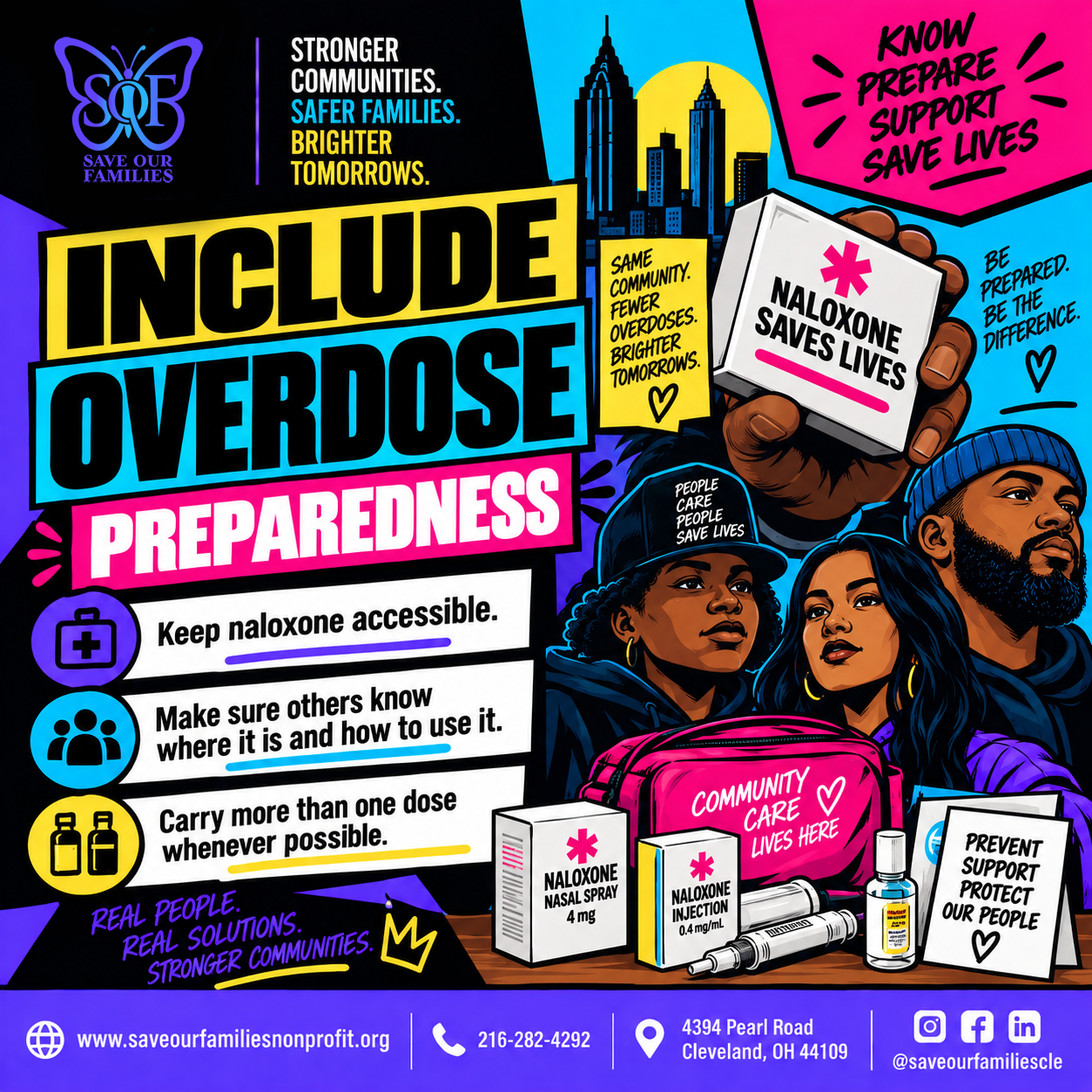
An overdose preparedness plan should include:
- Naloxone that is accessible and not expired
- More than one dose whenever possible
- Knowledge of how to recognize an overdose
- Training for household members and trusted contacts
- A plan to call 911
- Rescue breathing knowledge when appropriate
- Information about treatment, recovery, and community care resources
- Safe storage that remains easy to access in an emergency
Naloxone should not be hidden in a location that only one person knows. Tell trusted people where it is stored and how to use it. Replace naloxone after it is used and check expiration dates as part of regular household preparedness reviews.
People who use substances deserve emergency plans built around safety, dignity, and survival, not judgment. Preparedness efforts must also recognize that abrupt interruptions in access to medication, supplies, treatment, or social support can create additional health risks.
Plan for Mental and Emotional Health
Emergencies can intensify anxiety, depression, grief, trauma responses, sleep problems, and feelings of disconnection. People with previous trauma may experience reminders of earlier instability or loss.
A mental health preparedness plan may include:
- Contact information for mental health providers
- Crisis and peer-support numbers
- A list of grounding or coping strategies
- Comfort items for children and adults
- Headphones or sensory supports
- A written routine for medication, meals, rest, and sleep
- Contact information for trusted friends, relatives, faith leaders, or community organizations
- A plan for reducing exposure to distressing news while continuing to receive essential alerts
Adults should provide children with honest, age-appropriate information and create opportunities for them to ask questions. Predictable routines, reassurance, familiar objects, and calm communication can help restore a sense of safety.
If someone is in immediate danger or experiencing a life-threatening emergency, call 911. People experiencing a mental health, suicide, or substance-use crisis can call or text 988 to reach the 988 Suicide & Crisis Lifeline.
Protect Important Information
Store important records in a waterproof and fire-resistant container when possible. Keep password-protected digital copies in a secure location that can be accessed away from home.
Documents may include:
- Identification
- Birth certificates
- Insurance information
- Medication and medical records
- Emergency contacts
- Housing or lease information
- Benefit documentation
- Pet vaccination records
- School and caregiving information
- Copies of prescriptions
- Photographs or records of valuable property
Do not depend entirely on a phone. Batteries fail, devices can be lost, and internet service may be unavailable. A printed contact list and paper copy of essential information provide an important backup.
Make the Plan Accessible
A preparedness plan must work for the people expected to use it. People with disabilities and caregivers should consider communication, transportation, medication, mobility, sensory, and personal-assistance needs.
Planning questions may include:
- Will emergency alerts be accessible?
- Is written, audio, visual, large-print, translated, or plain-language information needed?
- Can mobility equipment be transported?
- Is backup power available for medical or communication devices?
- Will a shelter accommodate a service animal?
- Who can provide personal assistance if a regular caregiver is unavailable?
- Are evacuation routes physically accessible?
- Can essential instructions be communicated if a person is separated from their support network?
Create a support network of at least two or three trusted people when possible. Share relevant information with consent, explain how equipment works, and practice assisting safely.
Stay Informed Through More Than One Source
No single communication method is guaranteed to work during every emergency. Use multiple ways to receive information, such as:
- Wireless Emergency Alerts
- Local television and radio
- Weather alerts
- Trusted local government accounts
- Community organizations
- School and workplace notification systems
- A battery-powered or hand-crank radio
Cuyahoga County residents can register for ReadyNotify, the county’s emergency notification system. It is used by the county and participating municipalities to send public notifications about emergencies and other time-sensitive conditions (Cuyahoga County, n.d.).
Verify information before sharing it.
During emergencies, false information can spread quickly and may direct people toward unsafe locations, unavailable resources, or fraudulent services.
Develop a Community Care Plan
Preparedness becomes stronger when neighbors know one another before a crisis.
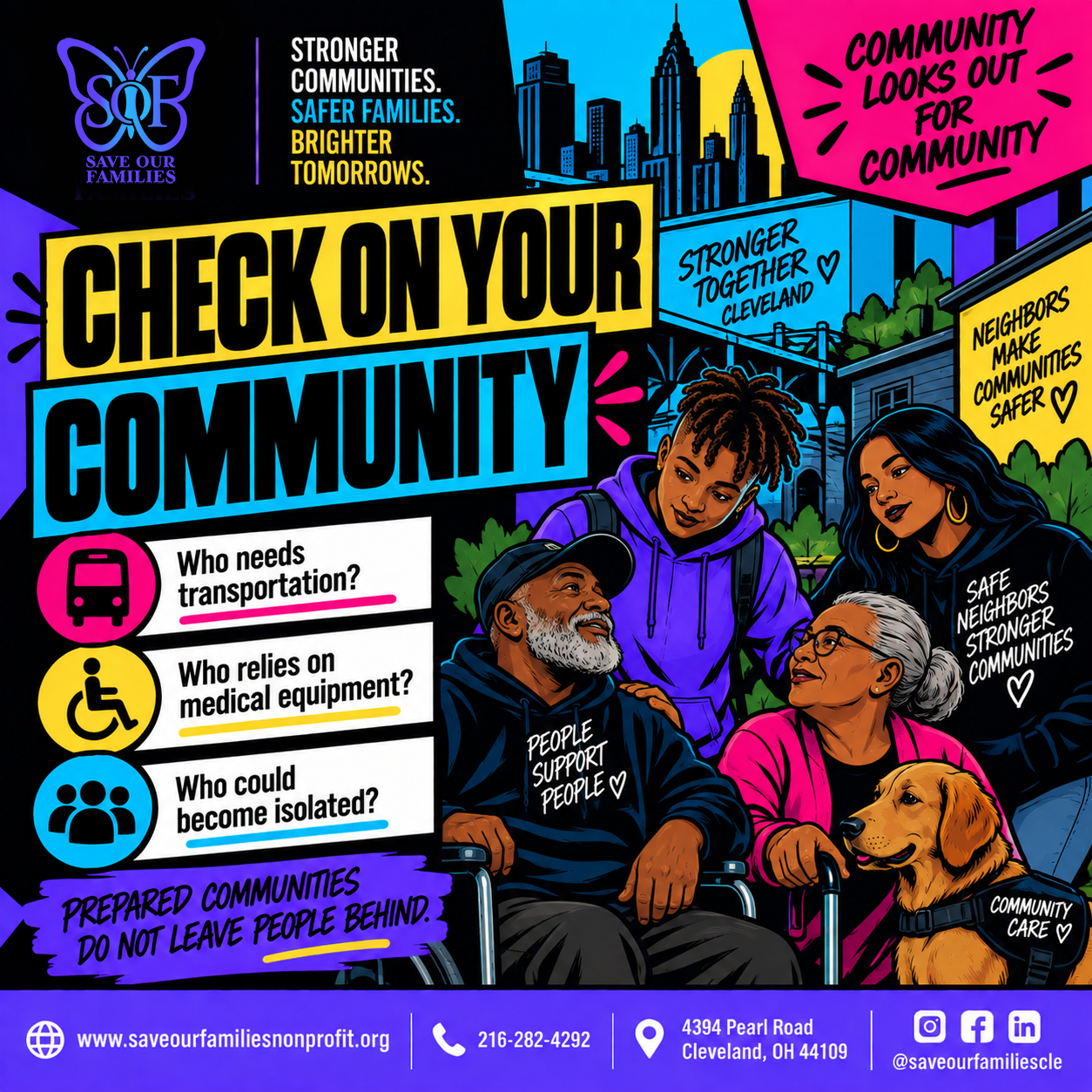
A neighborhood or community care plan can identify:
- Older adults or people who may need a check-in
- Residents with disabilities or medical equipment needs
- Households without transportation
- People who may need language support
- Families with infants or young children
- Safe indoor locations during extreme temperatures
- Residents trained in first aid, CPR, naloxone administration, or emergency response
- Available vehicles, generators, charging equipment, tools, and other shared resources
- Trusted methods for distributing verified information
Participation must remain voluntary and respect privacy. People should decide what information they want to share, with whom, and for what purpose.
Mutual support does not replace emergency services or government responsibility. It helps close the dangerous gap between the beginning of a crisis and the arrival of formal assistance.
Preparedness on a Limited Budget
Preparedness should never be presented as a luxury product. Families can strengthen readiness without purchasing a preassembled commercial kit.
Low-cost steps include:
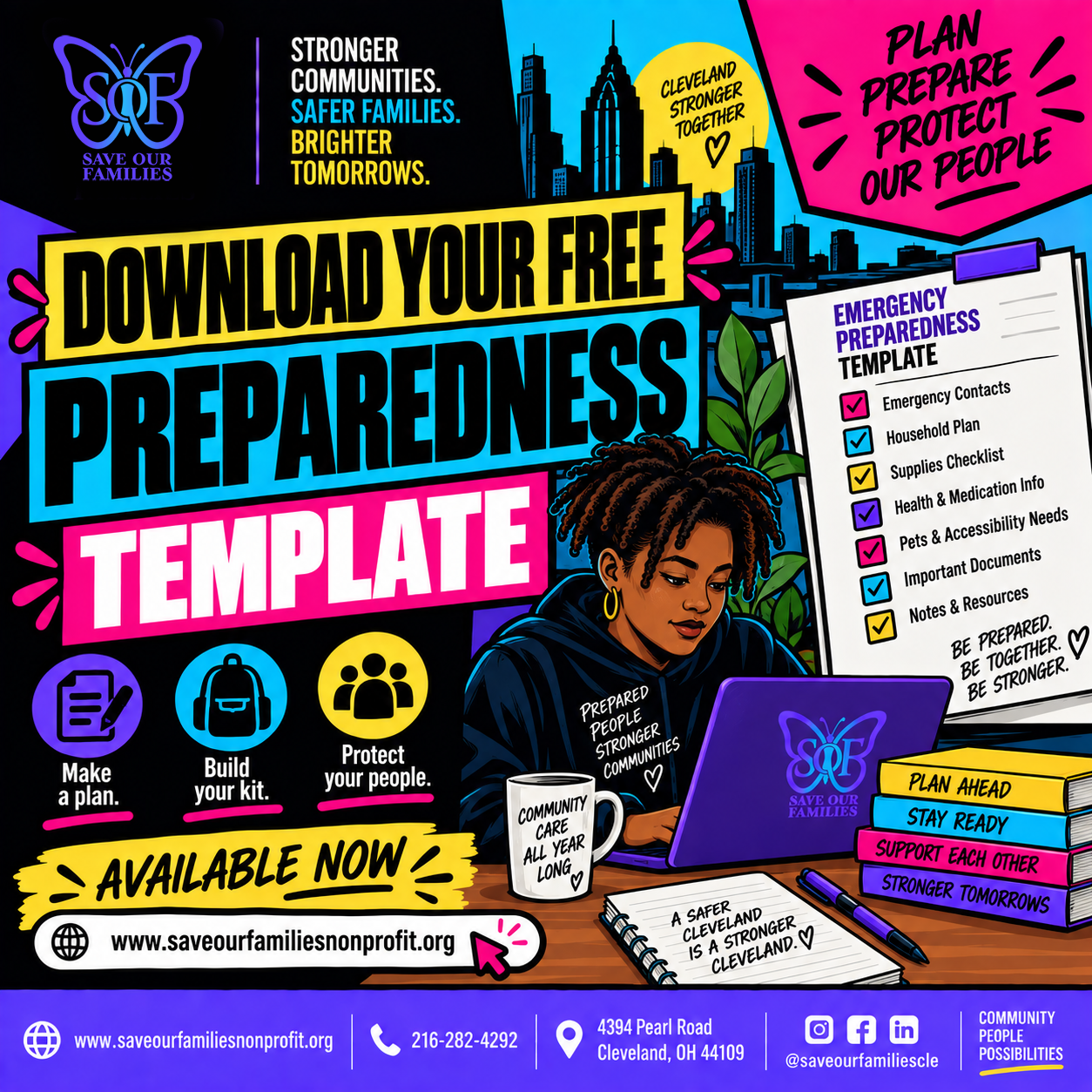
- Write down emergency contacts.
- Visit food pantries for shelf stable items.
- Choose meeting locations.
- Register for local alerts.
- Check smoke and carbon monoxide alarms.
- Place medications and critical information where they can be reached quickly.
- Save clean containers for emergency water storage.
- Add one shelf-stable item during a regular shopping trip.
- Ask providers for copies of medical and prescription information.
- Download or print local emergency guidance.
- Connect with neighbors and identify who can help with transportation, communication, caregiving, or wellness checks.
Community institutions can support preparedness by distributing supplies, offering training, providing charging locations, sharing multilingual information, and building plans with residents rather than designing plans without them.
A Four-Week Preparedness Challenge
National Preparedness Month offers an opportunity to take manageable action throughout September.
Week One: Know Your Risk
Identify the emergencies most likely to affect your household. Register for alerts and locate safe areas in your home.
Week Two: Make Your Plan
Choose meeting locations, select an out-of-area contact, discuss transportation, and determine how household members will reconnect.
Week Three: Build or Review Your Kit
Check food, water, medications, hygiene supplies, first aid items, naloxone, batteries, chargers, documents, and pet supplies. Replace expired or damaged items.
Week Four: Strengthen Your Network
Talk with neighbors, relatives, caregivers, and community organizations. Identify who may need assistance and what resources can be shared safely.
Preparedness is not completed once. Review the plan when seasons change, children begin a new school year, someone starts a new medication, a household member develops a disability, transportation changes, or someone moves into or out of the home.
From Individual Survival to Community Resilience
A resilient community is not one in which every household is expected to survive independently.
It is one in which people have reliable information, accessible services, practical resources, and relationships they can activate during a crisis.
Preparedness asks us to think beyond what we personally need. It asks whether the person next door can receive an alert, whether an older resident has medication, whether a family has transportation, whether someone has naloxone, and whether people know where to turn without fear of stigma or judgment.
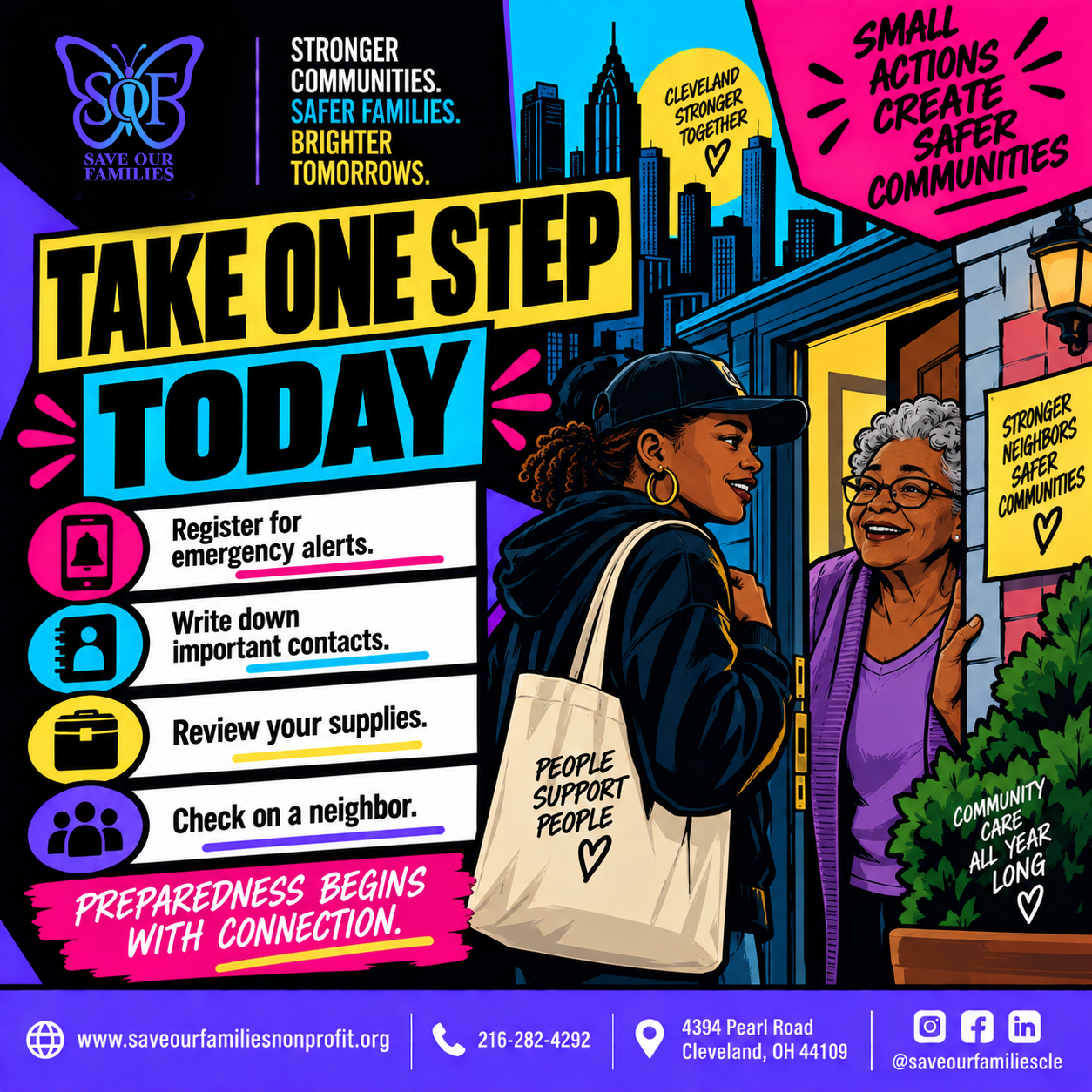
This National Preparedness Month, begin with one action. Write down an emergency contact. Check on a neighbor. Replace expired naloxone. Assemble a small supply kit. Register for local alerts. Learn a lifesaving skill. Then help someone else do the same.
Preparedness is not fear. It is planning, connection, and care put into action before the moment of crisis.
Save Our Families provides community-based services and practical support designed to protect health, preserve dignity, and strengthen local networks of care.
References
Centers for Disease Control and Prevention. (2024, April 18). Personal needs. https://www.cdc.gov/prepare-your-health/take-action/personal-needs.html
Cuyahoga County. (n.d.). Sign up for ReadyNotify. Retrieved September 16, 2026, from https://cuyahogacounty.gov/ready/readynotify/readynotify
Federal Emergency Management Agency. (2026a, July 1). Build a kit. Ready.gov. https://www.ready.gov/kit
Federal Emergency Management Agency. (2026b). Make a plan. Ready.gov. https://www.ready.gov/plan
Federal Emergency Management Agency. (2026c). National Preparedness Month: Americans stand ready. Ready.gov. https://www.ready.gov/stand-ready
Federal Emergency Management Agency. (n.d.). People with disabilities. Ready.gov. https://www.ready.gov/disability
Substance Abuse and Mental Health Services Administration. (n.d.). Disaster preparedness, response, and recovery. https://www.samhsa.gov/mental-health/disaster-preparedness
U.S. Department of Health and Human Services. (n.d.). 988 Suicide & Crisis Lifeline. https://www.988lifeline.org/
about author

Created by the team at Save Our Families.
subscribe to our newsletter
Join the Save Our Families newsletter for updates on community care, mental health tools, healing stories, and events you won’t want to miss.
Note: We promise not to flood your inbox—just healing vibes, resources, and real talk.
Recent Posts
Preparedness Is Community Care: Building Safety Before an Emergency Happens
Preparedness Is Community Care: Building Safety Before an Emergency Happens Every September, National Preparedness Month calls attention to a simple but consequential truth: emergencies rarely provide enough time to begin planning after they arrive. Severe [...]

National Black Reading Month: Reading as Memory, Inquiry, and Community Power
National Black Reading Month: Reading as Memory, Inquiry, and Community Power Save Our Families recommends five books that examine Black joy, resistance, reparative justice, collective healing, and the political power of storytelling. We live in [...]
National Voter Registration Day 2026: Register to Vote in Ohio
September 15 is National Voter Registration Day, a nationwide reminder that every eligible voter deserves the opportunity to participate in the decisions shaping their community. Voting affects the systems surrounding our everyday lives, including schools, [...]

