
Safety Is a Right: When Domestic Violence and Stalking Intersect
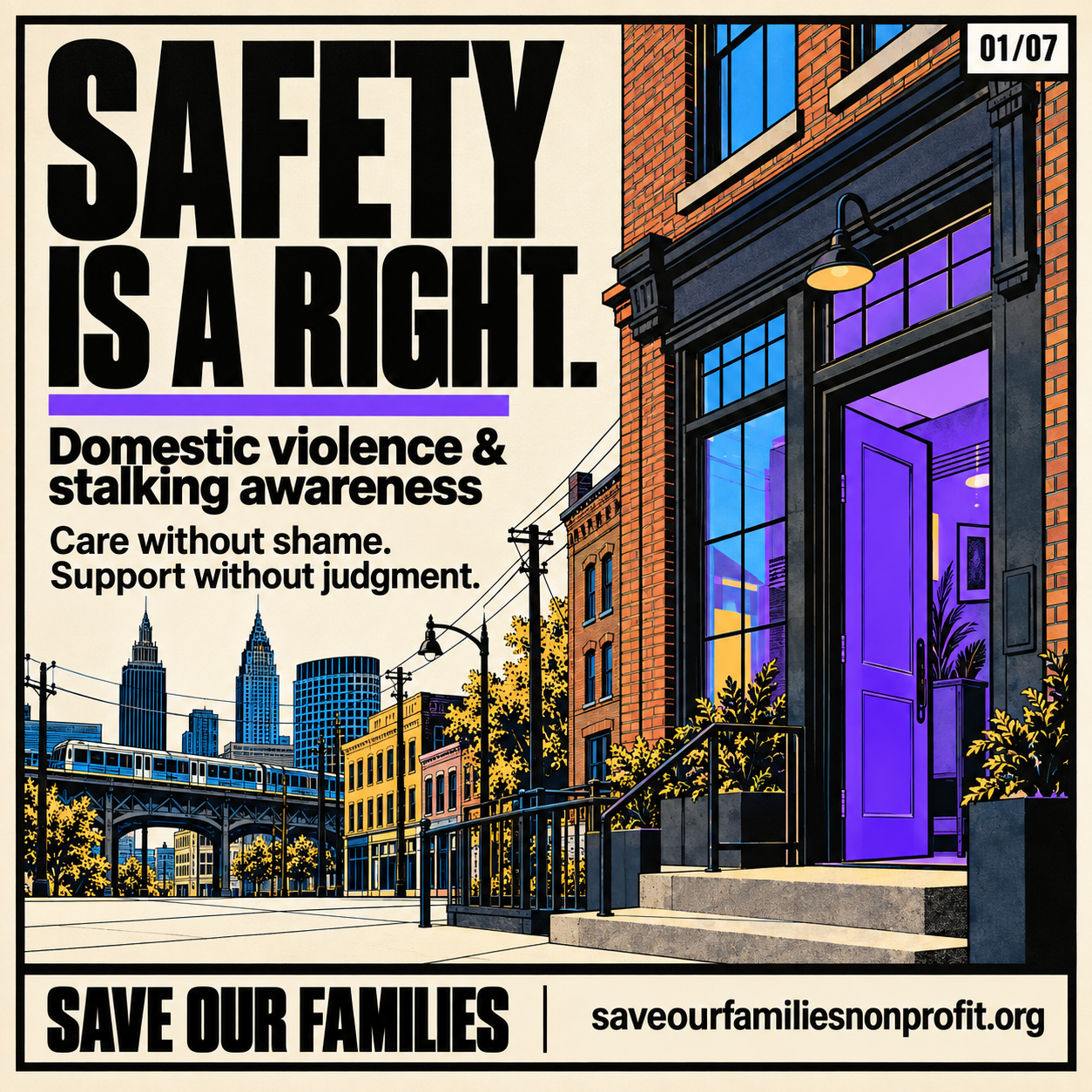
No one should have to earn safety!
Every person deserves relationships where their boundaries matter, their choices belong to them, and their home offers room to breathe. When someone uses fear, humiliation, isolation, surveillance, or violence to control another person, that person’s dignity is violated.
At Save Our Families, we believe community care includes recognizing abuse, listening without judgment, and helping people access practical pathways to safety. Awareness becomes meaningful when someone can reach an advocate, receive support, and make decisions without being shamed.
Domestic violence and stalking can overlap. Understanding that connection helps us recognize abuse that continues beyond the home, across digital spaces, and after a relationship ends.
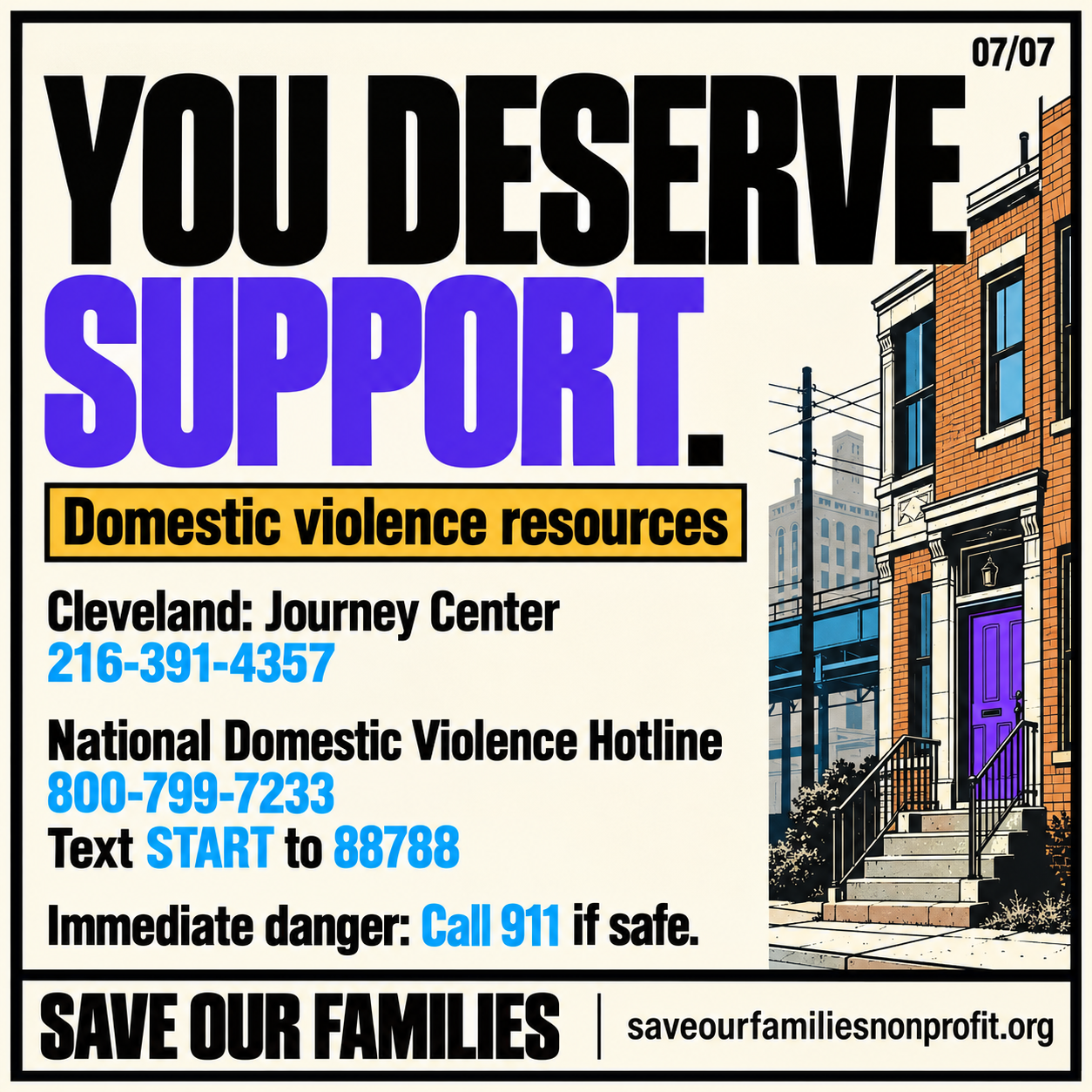
Need help now? In Cleveland and Cuyahoga County, call Journey Center for Safety and Healing at 216-391-4357. Nationwide, call 800-799-7233, text START to 88788, or visit The National Domestic Violence Hotline. If you are in immediate danger, call 911 if you can safely do so.
Digital safety: If someone may monitor your phone or computer, consider using a safer device to seek support. Private browsing and deleting history do not guarantee that your activity cannot be traced (The National Domestic Violence Hotline, n.d.-b).
Recognizing Abuse Beyond Visible Injuries
Relationship abuse involves behaviors used to gain or maintain power and control over a partner.
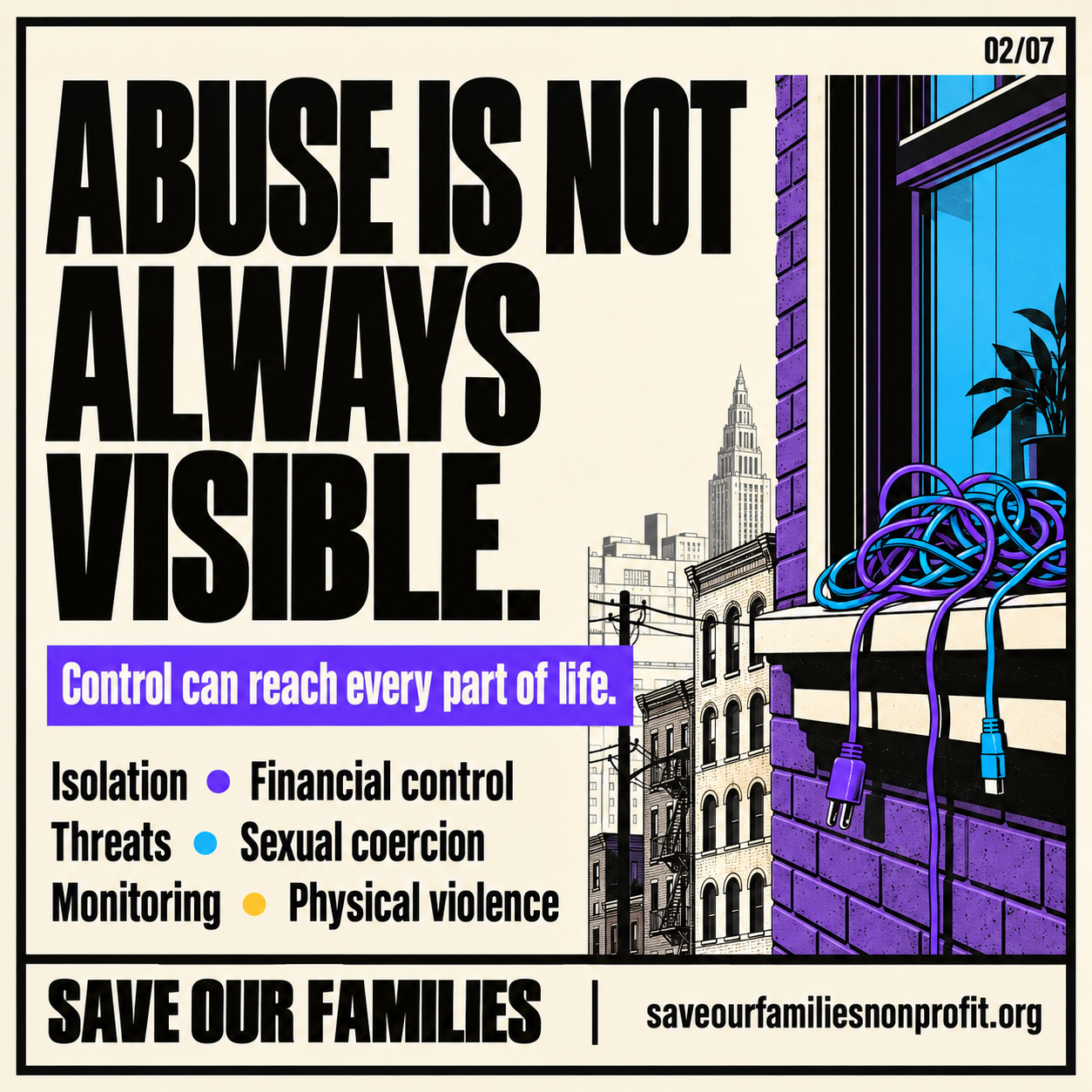
Physical violence is one form, but abuse can also affect someone’s finances, relationships, sexual autonomy, and access to necessities.
Warning signs may include:
- Physical violence or intimidation: Hitting, restraining someone, blocking exits, or threatening harm.
- Emotional abuse: Humiliation, threats, persistent degradation, or manipulation that undermines someone’s confidence in their experiences.
- Financial control: Taking earnings, restricting access to money, or interfering with employment.
- Sexual or reproductive coercion: Pressuring sexual activity, disregarding consent, or interfering with contraception.
- Technology-facilitated abuse: Demanding passwords, monitoring devices, tracking location, or sending threatening messages.
- Isolation: Restricting contact with friends, relatives, and other sources of support.
These behaviors can overlap. Someone does not need visible injuries to deserve help (The National Domestic Violence Hotline, n.d.-d).
A relationship should leave room for disagreement, privacy, and independent choices. When saying “no” brings fear of punishment, that deserves attention.
When Domestic Violence and Stalking Intersect
Ending a relationship does not always end the abuse.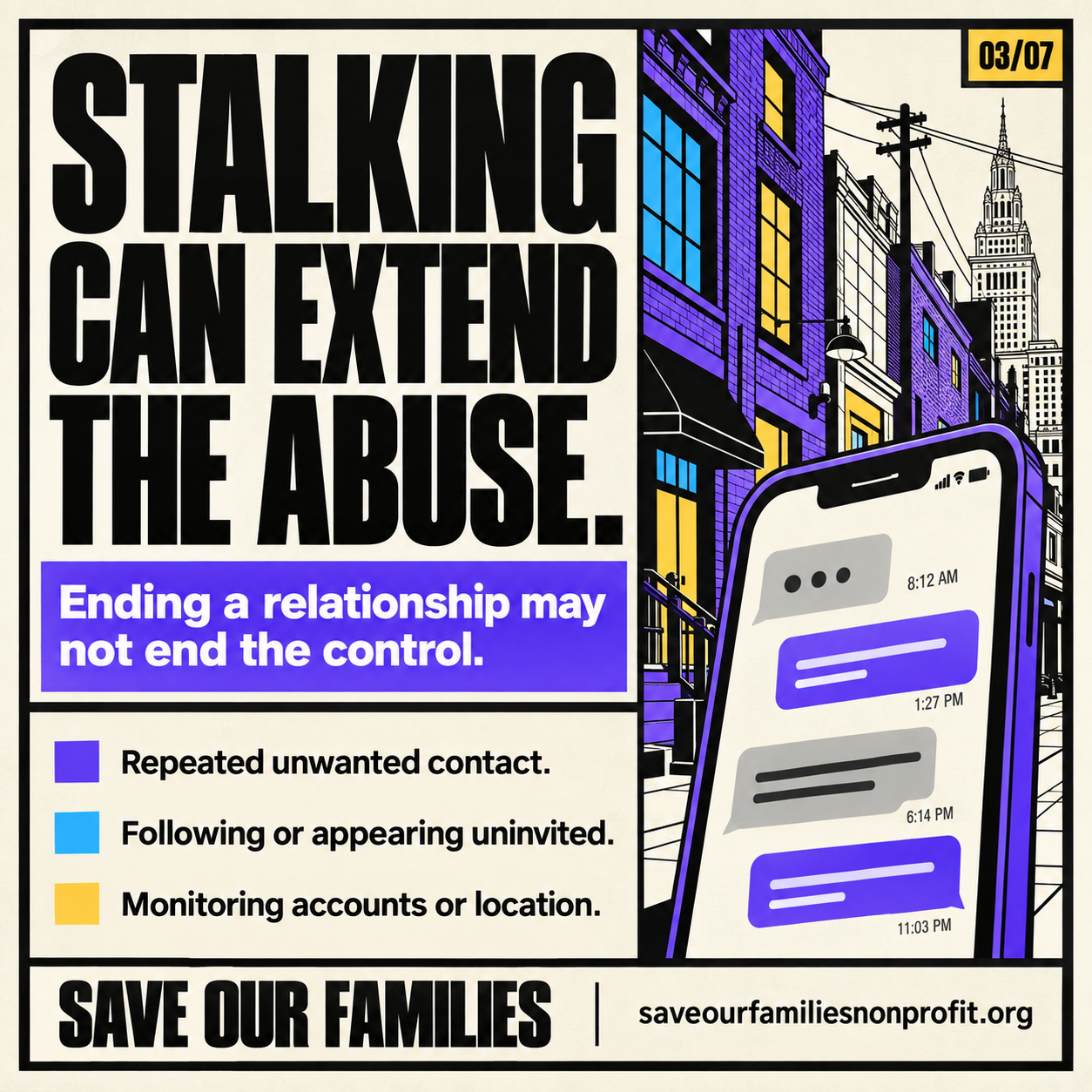
Stalking involves a pattern of behavior directed toward a person that would cause reasonable fear for their safety, concern for another person’s safety, or substantial emotional distress. A current or former partner can be responsible, but stalking can also involve acquaintances or other people (Stalking Prevention, Awareness, and Resource Center [SPARC], n.d.-b).
Behaviors may include repeated unwanted messages, following someone, appearing at familiar locations, monitoring activities, contacting loved ones to obtain information, sending unwanted gifts, damaging property, or making threats. What matters is the pattern and its context (SPARC, n.d.-b).
For example, a delivery may appear harmless to an outsider. For someone who relocated to escape an abusive partner, that delivery can communicate that the person has found them. Looking at each incident separately can conceal the larger pattern of intimidation.
Stalking deserves specific attention when it occurs alongside domestic violence. It has its own risks and safety-planning needs; it should not disappear beneath a general description of relationship abuse (SPARC, n.d.-b; The National Domestic Violence Hotline, n.d.-c).
Persistent pursuit should never be romanticized when it creates fear or violates someone’s autonomy.
Safety Requires More Than Telling Someone to Leave
Leaving an abusive relationship can involve serious risks. Someone may face retaliation, financial dependence, limited housing options, concerns about children, or reliance on a partner for daily support. Fear, shame, emotional attachment, and threats can also influence decisions.
These circumstances help explain why a survivor’s choices may differ from what someone outside the relationship expects. They do not make the survivor responsible for the abuse. Separation can be dangerous, and support should account for that risk (The National Domestic Violence Hotline, n.d.-f).
Our responsibility is to ask better questions:
What would help you feel safer? Who can you trust? What support would make another option possible?
Advice has limits when someone needs transportation, food, childcare, accessible housing, or a safe way to communicate. Community care requires us to take those needs seriously.
Intersectionality: Barriers to Safety Can Compound
Understanding the overlap between domestic violence and stalking means examining the behaviors someone experiences. An intersectional approach also asks how identity, discrimination, and access to resources shape their options for safety.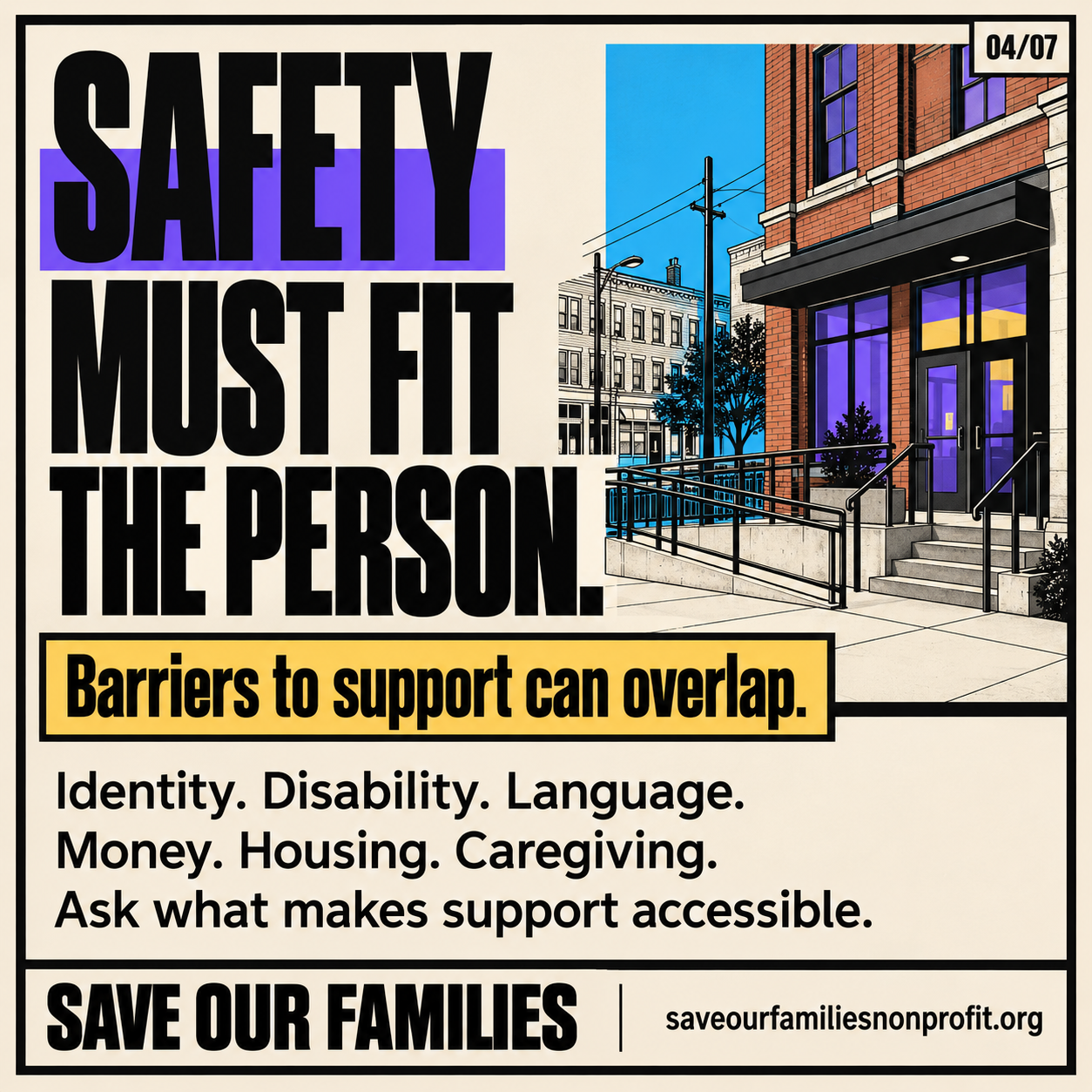
For example, LGBTQ+ survivors may encounter stigma, prejudice, or a lack of understanding when seeking services. These experiences can compound the harm of stalking and make respectful, affirming support especially important (SPARC, n.d.-a).
At Save Our Families, this means taking each person’s circumstances seriously. Race, gender, sexuality, disability, language, finances, and caregiving responsibilities should inform how we offer support rather than become reasons to dismiss someone’s needs.
Questions that put this commitment into practice include:
- Can the person safely access the recommended service?
- Is the space physically accessible?
- Can they communicate privately and in their preferred language?
- Do they need transportation or support for dependents?
- Does the provider respect their identity and relationships?
- What concerns do they have about sharing personal information?
We should ask rather than assume.
A referral is only useful when someone can use it safely.
Strength Must Include the Right to Receive Care
For Black women and others routinely expected to carry families and communities, we reject the idea that strength requires endless endurance. Being capable does not make someone immune to harm. Being respected in public does not guarantee safety at home.
We should never ask someone to protect a family’s image, a partner’s reputation, or a community’s comfort at the expense of their safety.
Our commitment must include men, LGBTQ+ people, Indigenous people, people with disabilities, and survivors whose experiences are too often overlooked. Support should respect the whole person without requiring them to explain away who they are.
A community that values resilience must also make room for rest, protection, and help.
How to Support Someone Experiencing Abuse or Stalking
A disclosure is a moment to listen carefully. You do not need a perfect speech. You need to respond in a way that preserves the person’s dignity and choices.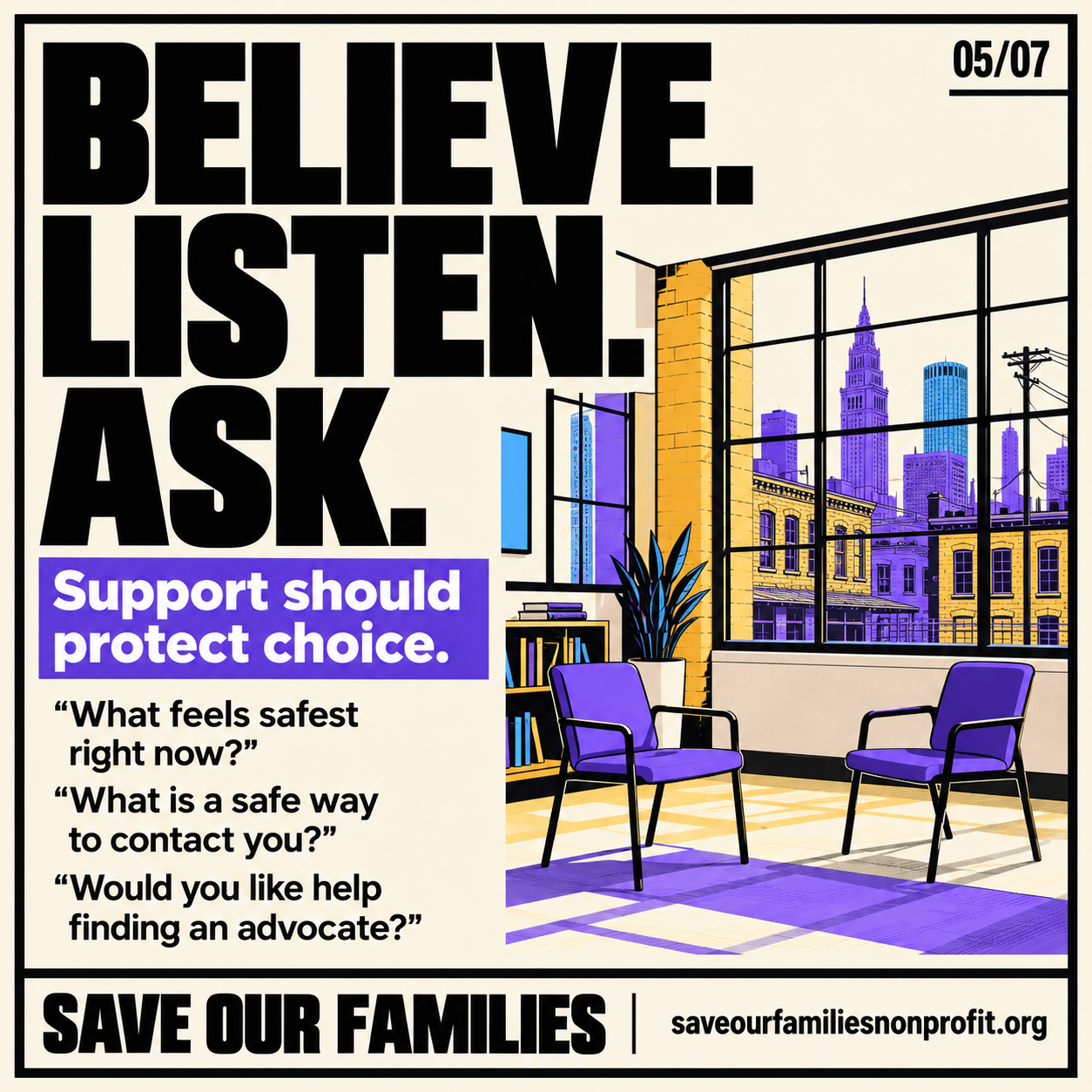
Helpful words include:
- “I believe you.”
- “You do not deserve to be treated this way.”
- “What feels safest for you right now?”
- “Would you like help connecting with an advocate?”
- “What is a safe way for me to contact you?”
Practical support might include groceries, transportation, accompaniment to an appointment, or help finding services. Ask permission before taking action or sharing information. Avoid pressuring someone to leave, confronting the person causing harm, or withdrawing support when the survivor makes a different decision than you hoped (The National Domestic Violence Hotline, n.d.-e).
When stalking is involved, protect the survivor’s location, routines, and contact information. Do not post identifying details or pass along information simply because someone claims to be concerned about them (The National Domestic Violence Hotline, n.d.-c).
Support should expand someone’s choices and strengthen their connection to care.
Safety Planning Should Follow the Survivor’s Circumstances
A safety plan is a personalized approach to reducing risk while experiencing abuse, preparing to leave, or after separation. An advocate can help someone explore options that fit their situation.
Planning may address trusted contacts, transportation, essential items, communication, and the needs of children or other dependents. The plan should also consider what could happen if the person causing harm discovers it. There is no single checklist that guarantees safety (The National Domestic Violence Hotline, n.d.-a).
For stalking, planning may include documenting incidents and preserving messages when safe to do so. Evidence should be kept somewhere the person causing harm cannot access.
Blocking contact, changing account settings, or removing tracking technology can sometimes trigger escalation. These decisions deserve individualized planning with an advocate rather than automatic advice (The National Domestic Violence Hotline, n.d.-c).
Survivors should not be expected to collect evidence at the expense of their immediate safety.
Download Our Free Personal Safety Plan
Digital Privacy Is Part of Safety
Phones, shared accounts, connected devices, and online activity can provide opportunities for monitoring.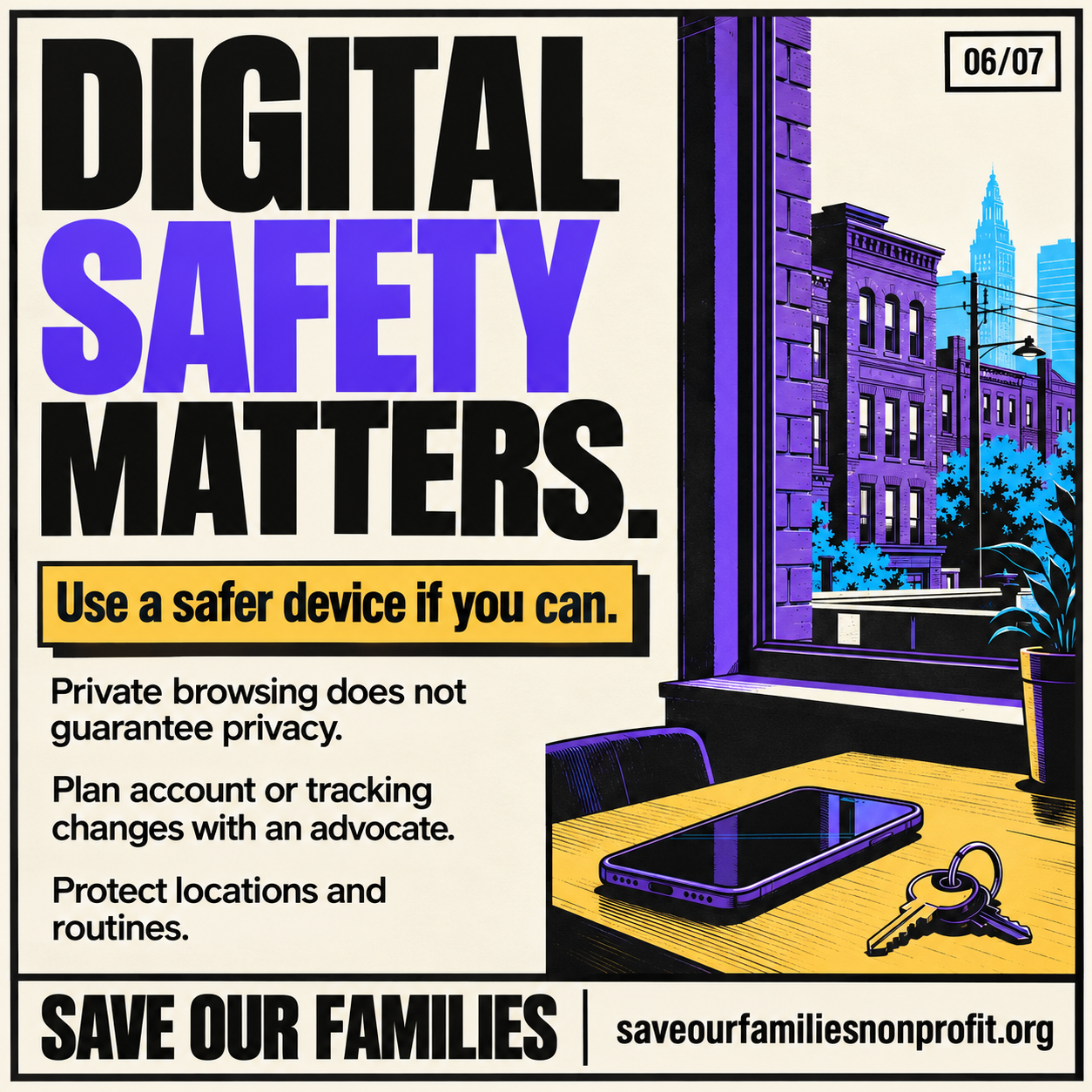
If surveillance is a concern, a safer device may help someone seek support with less exposure.
Private browsing does not make activity invisible. A quick-exit button closes or redirects a page but does not erase the history of visiting it. Consider digital-safety decisions within a broader safety plan (The National Domestic Violence Hotline, n.d.-b).
Community members can support privacy by asking before posting photographs, tagging locations, or sharing someone’s circumstances.
Domestic Violence and Stalking Resources
Resource information checked October 2, 2026. Contact providers about current availability and eligibility.
Journey Center for Safety and Healing
Cleveland and Cuyahoga County
24/7 Domestic Violence & Family Helpline: 216-391-4357
Journey offers services addressing domestic violence and child abuse, including emergency shelter, therapy, support groups, and advocacy (Journey Center for Safety and Healing, n.d.).
Visit Journey Center for Safety and Healing.
The National Domestic Violence Hotline
- Call: 800-799-7233
- Text: START to 88788
- Chat: TheHotline.org
Advocates provide support, safety planning, and connections to resources. Message and data rates may apply. The Hotline can help identify community resources but does not directly provide cash assistance, transportation, or hotel vouchers (The National Domestic Violence Hotline, n.d.-d).
Ohio Domestic Violence Network
ODVN provides survivor-assistance information and connections to domestic violence programs across Ohio (Ohio Domestic Violence Network, n.d.).
Find Ohio survivor assistance.
Love is respect
Relationship and dating-abuse support for young people
- Call: 866-331-9474
- Text: LOVEIS to 22522
- Chat: loveisrespect.org
Support is available 24/7. Message and data rates may apply.
StrongHearts Native Helpline
Culturally appropriate domestic and sexual violence support for Indigenous/Native Americans and Alaska Natives
Call: 844-762-8483
StrongHearts offers free, confidential, anonymous support 24/7 (StrongHearts Native Helpline, n.d.).
Visit StrongHearts Native Helpline.
Stalking Prevention, Awareness, and Resource Center
SPARC offers educational materials, documentation tools, and information about stalking. It does not provide direct survivor services. People seeking individual support should contact a local victim-service provider or domestic violence advocate.
Explore SPARC’s stalking resources.
Our Commitment at Save Our Families
Save Our Families approaches community care through practical services and trusted relationships. Food, hygiene supplies, and everyday support matter because dignity includes access to the things people need to live.
Our role is to strengthen access to community care and encourage connections with specialized advocates for domestic violence and stalking support.
For information about SOF’s community care services, call 216-282-4292, email info@saveour.family, or visit Save Our Families. Use a contact method that feels safe for your circumstances.
Awareness should change how we listen, how we protect privacy, and how we respond when someone asks for help.
You deserve care before a crisis becomes visible. You deserve support without shame. Your safety matters.
References
Journey Center for Safety and Healing. (n.d.). Journey Center for Safety and Healing. Retrieved October 2, 2026, from https://www.journeyneo.org/
love is respect. (n.d.). Get relationship help 24/7/365: Text, call or chat now. Retrieved October 2, 2026, from https://www.loveisrespect.org/get-relationship-help-24-7-365/
Ohio Domestic Violence Network. (n.d.). Survivor assistance. Retrieved October 2, 2026, from https://www.odvn.org/survivor-assistance/
Stalking Prevention, Awareness, and Resource Center. (n.d.-a). Stalking and LGBTQ+ individuals: Fact sheet. https://www.stalkingawareness.org/wp-content/uploads/2021/09/SPARC_Stalking-LGBTQ-Fact-Sheet.pdf
Stalking Prevention, Awareness, and Resource Center. (n.d.-b). What is stalking? https://www.stalkingawareness.org/definition-faqs/
StrongHearts Native Helpline. (n.d.). StrongHearts Native Helpline. Retrieved October 2, 2026, from https://strongheartshelpline.org/
The National Domestic Violence Hotline. (n.d.-a). Create your personal safety plan. https://www.thehotline.org/plan-for-safety/create-your-personal-safety-plan/
The National Domestic Violence Hotline. (n.d.-b). Internet safety for survivors. https://www.thehotline.org/plan-for-safety/internet-safety/
The National Domestic Violence Hotline. (n.d.-c). Stalking safety planning. https://www.thehotline.org/resources/stalking-safety-planning/
The National Domestic Violence Hotline. (n.d.-d). Types of abuse. https://www.thehotline.org/resources/types-of-abuse/
The National Domestic Violence Hotline. (n.d.-e). Ways to support a domestic violence survivor. https://www.thehotline.org/support-others/ways-to-support-a-domestic-violence-survivor/
The National Domestic Violence Hotline. (n.d.-f). Why people stay in an abusive relationship. https://www.thehotline.org/support-others/why-people-stay-in-an-abusive-relationship/
about author

Created by the team at Save Our Families.
subscribe to our newsletter
Join the Save Our Families newsletter for updates on community care, mental health tools, healing stories, and events you won’t want to miss.
Note: We promise not to flood your inbox—just healing vibes, resources, and real talk.
Recent Posts
Safety Is a Right: When Domestic Violence and Stalking Intersect
No one should have to earn safety! Every person deserves relationships where their boundaries matter, their choices belong to them, and their home offers room to breathe. When someone uses fear, humiliation, isolation, surveillance, or [...]
National Self-Awareness Day: Reflection Without Judgment
National Self-Awareness Day: Reflection Without Judgment Every person carries an internal world shaped by emotions, needs, memories, values, habits, expectations, and relationships. Much of that world influences our decisions before we consciously recognize what is [...]
Preparedness Is Community Care: Building Safety Before an Emergency Happens
Preparedness Is Community Care: Building Safety Before an Emergency Happens Every September, National Preparedness Month calls attention to a simple but consequential truth: emergencies rarely provide enough time to begin planning after they arrive. Severe [...]

