40 Suspected Overdose Deaths in Five Weeks: A Call to Action for Cuyahoga County
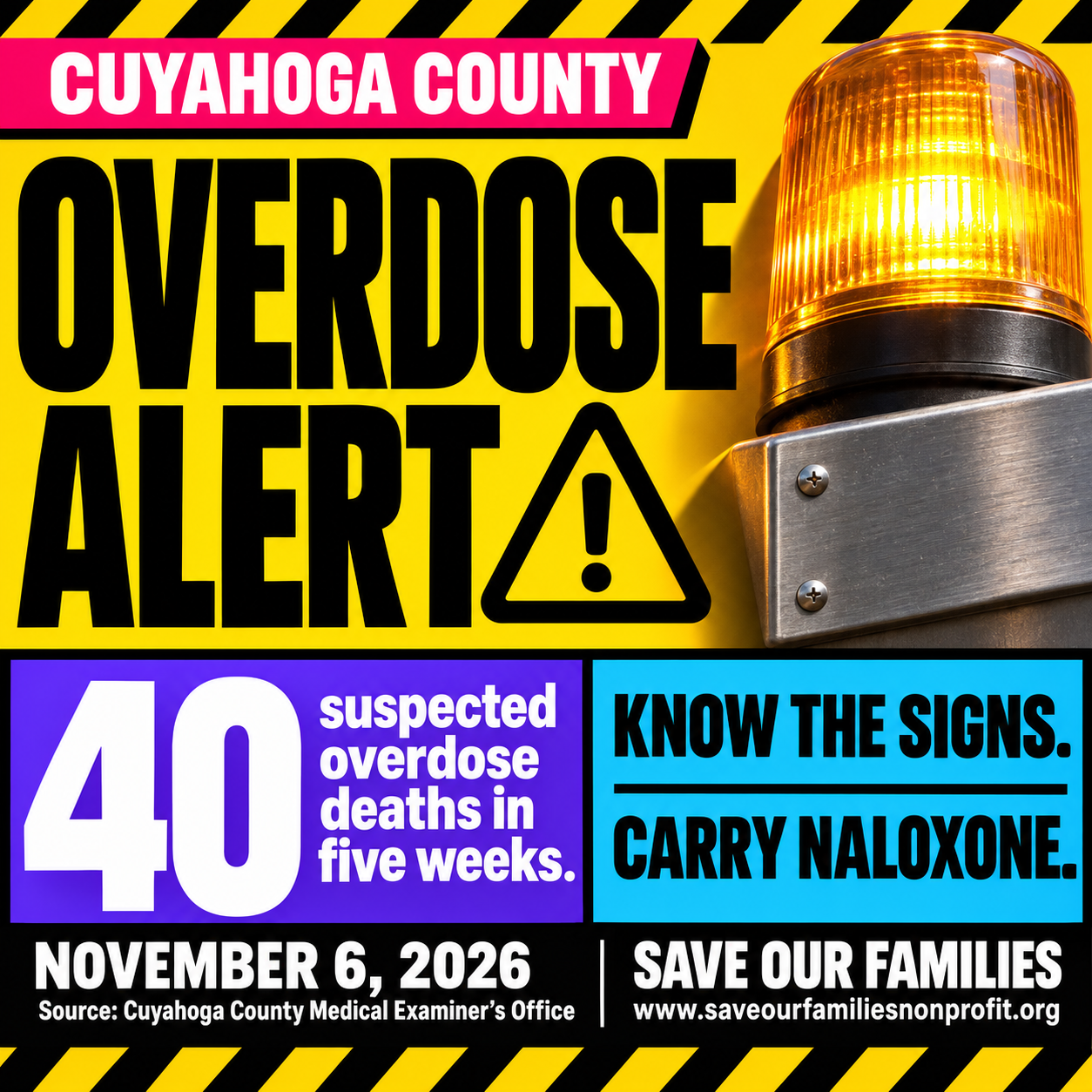
If someone is unresponsive, has trouble breathing, experiences chest pain, or has a seizure after using drugs, call 911 immediately. Give naloxone if opioids could be involved.
Cuyahoga County has issued a public health alert following a sustained increase in suspected overdose deaths during October and November. The Medical Examiner’s Office reported 40 suspected overdose deaths over a five-week period, including 17 Black residents (Cuyahoga County Medical Examiner’s Office, 2026).
These numbers represent people whose lives mattered, families grieving, and communities experiencing loss.
What the alert tells us
According to the Medical Examiner’s Office, a majority of preliminary drug screenings were positive for cocaine, and half also included fentanyl. These findings are preliminary. The office is continuing to evaluate the data with community partners.
Finding cocaine and fentanyl in the same screening does not establish whether someone knowingly used both substances or whether fentanyl was present without their knowledge. The alert does reinforce the importance of overdose prevention and response for people who use stimulants as well as people who use opioids.
Recognize an emergency
Cocaine and other stimulants can cause serious medical emergencies. Warning signs can include chest pain, a racing or irregular heartbeat, overheating, severe confusion or agitation, seizures, and loss of consciousness (Centers for Disease Control and Prevention [CDC], 2024).
Opioid overdose signs include:
– Inability to wake the person.
– Slow, shallow, or stopped breathing.
– Gurgling, choking, or snoring sounds from someone who cannot be awakened.
– Discoloration of the lips or nails (CDC, n.d.-c).
You do not need to know exactly what someone took before calling for help.
What to do if you suspect an overdose: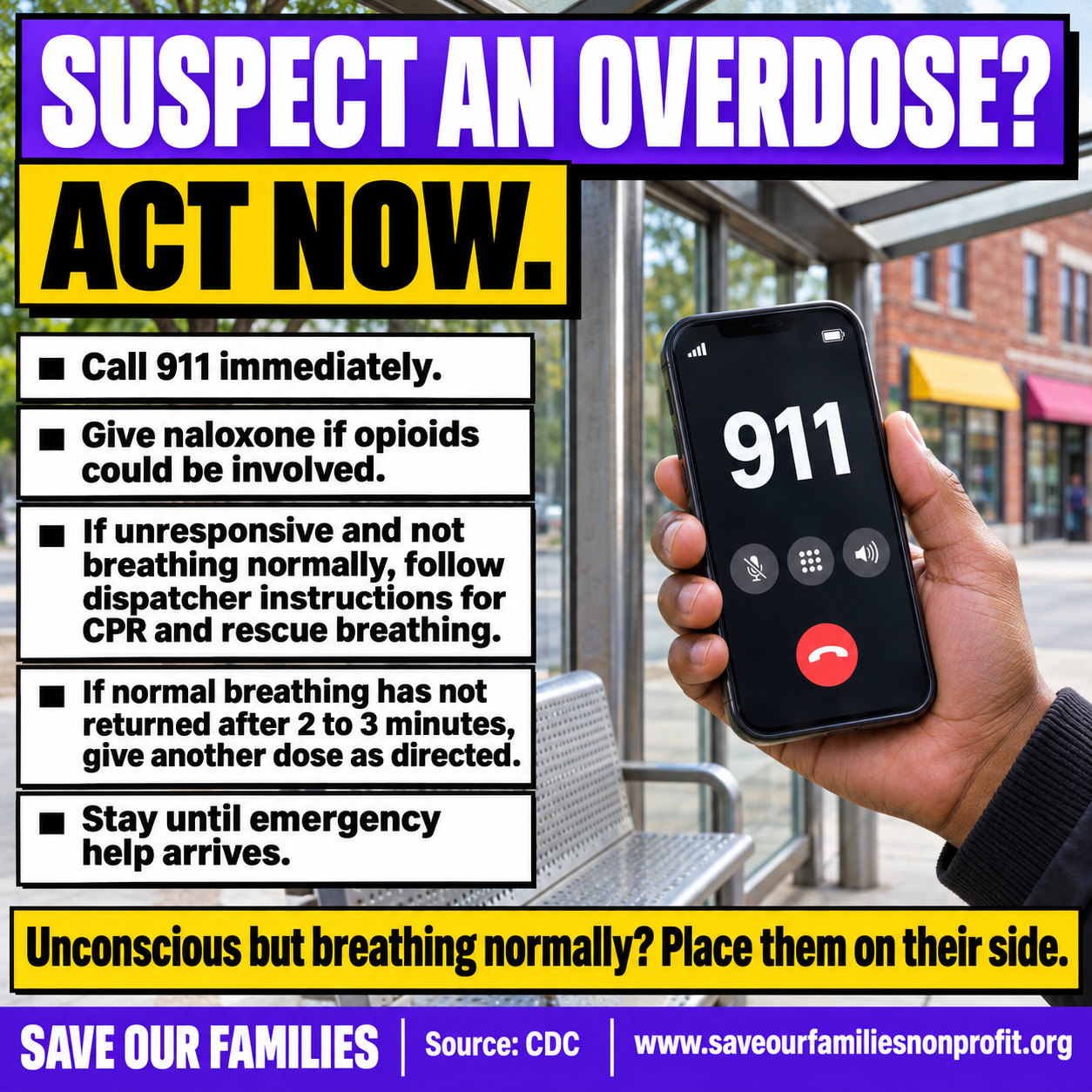 1. Call 911 immediately and request an ambulance. Describe the person’s breathing, responsiveness, and symptoms. Follow the dispatcher’s instructions.
2. Give naloxone if opioids could be involved. Naloxone can reverse an opioid overdose, including one involving fentanyl. It does not reverse cocaine’s effects, but it can help when opioids are also involved (CDC, 2024).
3. Support breathing. If the person is unresponsive and is not breathing normally, follow the dispatcher’s instructions for CPR and rescue breathing.
4. Give additional naloxone if needed. If normal breathing has not returned after 2 to 3 minutes, give another dose, following the product instructions (CDC, n.d.-b).
5. Stay until emergency help arrives. If the person is unconscious but breathing normally, place them on their side. During a stimulant-related emergency, reduce noise and crowding and help prevent overheating when it is safe to do so (CDC, 2024; CDC, n.d.-c).
Make a plan before an emergency
- Keep naloxone nearby. Tell people where it is and how to use it.
- Avoid using alone. Call the Never Use Alone Hotline or Safe Spot. Have someone present who is not using at the same time and can respond if needed.
- Use fentanyl test strips according to their instructions. They provide information about the sample tested. A negative result does not guarantee that a substance is safe (CDC, n.d.-a).
- Talk about overdose prevention with people who use cocaine or other stimulants. Access to naloxone matters even when someone does not intend to use opioids.
- Share this information without judgment. People deserve support whether they are actively using substances, considering treatment, or in recovery.
Get connected with Save Our Families
Save Our Families provides free naloxone to Ohio residents through Project DAWN, overdose prevention education, and community care resources. No insurance needed. Contact us for current availability and pickup information. Contact us for supplies, education, and connection; reach out before an emergency happens.
Phone: 216-282-4292
Email: info@saveour.family
An overdose is a medical emergency. Call 911 and request an ambulance.
Yes. Naloxone nasal spray has been established for safe use in known or suspected opioid overdoses.
Immediately when an opioid overdose is known or suspected.
Naloxone will not affect someone who doesn’t need it (someone who has not used opioids).
References
Centers for Disease Control and Prevention. (2024). Stimulant guide: Answers to emerging questions about stimulants in the context of the overdose epidemic. https://www.cdc.gov/overdose-prevention/media/pdfs/2024/03/cdc-stimulant-guide.pdf
Centers for Disease Control and Prevention. (n.d.-a). Fentanyl. Retrieved November 6, 2026, from https://www.cdc.gov/overdose-prevention/about/fentanyl.html
Centers for Disease Control and Prevention. (n.d.-b). Naloxone frequently asked questions. Retrieved November 6, 2026, from https://www.cdc.gov/stop-overdose/naloxone-faq/index.html
Centers for Disease Control and Prevention. (n.d.-c). What to do if you think someone is overdosing. Retrieved November 6, 2026, from https://www.cdc.gov/stop-overdose/response/
Cuyahoga County Medical Examiner’s Office. (2026, November 6). Medical examiner: Sustained increase in suspected overdose deaths [Press release].
about author

Created by the team at Save Our Families.
subscribe to our newsletter
Join the Save Our Families newsletter for updates on community care, mental health tools, healing stories, and events you won’t want to miss.
Note: We promise not to flood your inbox—just healing vibes, resources, and real talk.
Recent Posts
40 Suspected Overdose Deaths in Five Weeks: A Call to Action for Cuyahoga County
If someone is unresponsive, has trouble breathing, experiences chest pain, or has a seizure after using drugs, call 911 immediately. Give naloxone if opioids could be involved. Cuyahoga County has issued a public health alert [...]
We Voted, The Real Election Work Starts Now.
The Election Is Over. Our Responsibility Is Not. On November 3rd, millions of Americans participated in an exercise that has become synonymous with democracy: voting. Some celebrated the results. Others experienced disappointment, uncertainty, or frustration. [...]
Safety Is a Right: When Domestic Violence and Stalking Intersect
No one should have to earn safety! Every person deserves relationships where their boundaries matter, their choices belong to them, and their home offers room to breathe. When someone uses fear, humiliation, isolation, surveillance, or [...]

