We Voted, The Real Election Work Starts Now.
The Election Is Over. Our Responsibility Is Not.
On November 3rd, millions of Americans participated in an exercise that has become synonymous with democracy: voting.
Some celebrated the results. Others experienced disappointment, uncertainty, or frustration. Many returned to their everyday responsibilities, navigating the same economic pressures, healthcare challenges, housing insecurity, and community concerns that existed before Election Day.
Regardless of individual political beliefs or electoral outcomes, one fundamental question deserves our collective attention:
We voted. Now what?
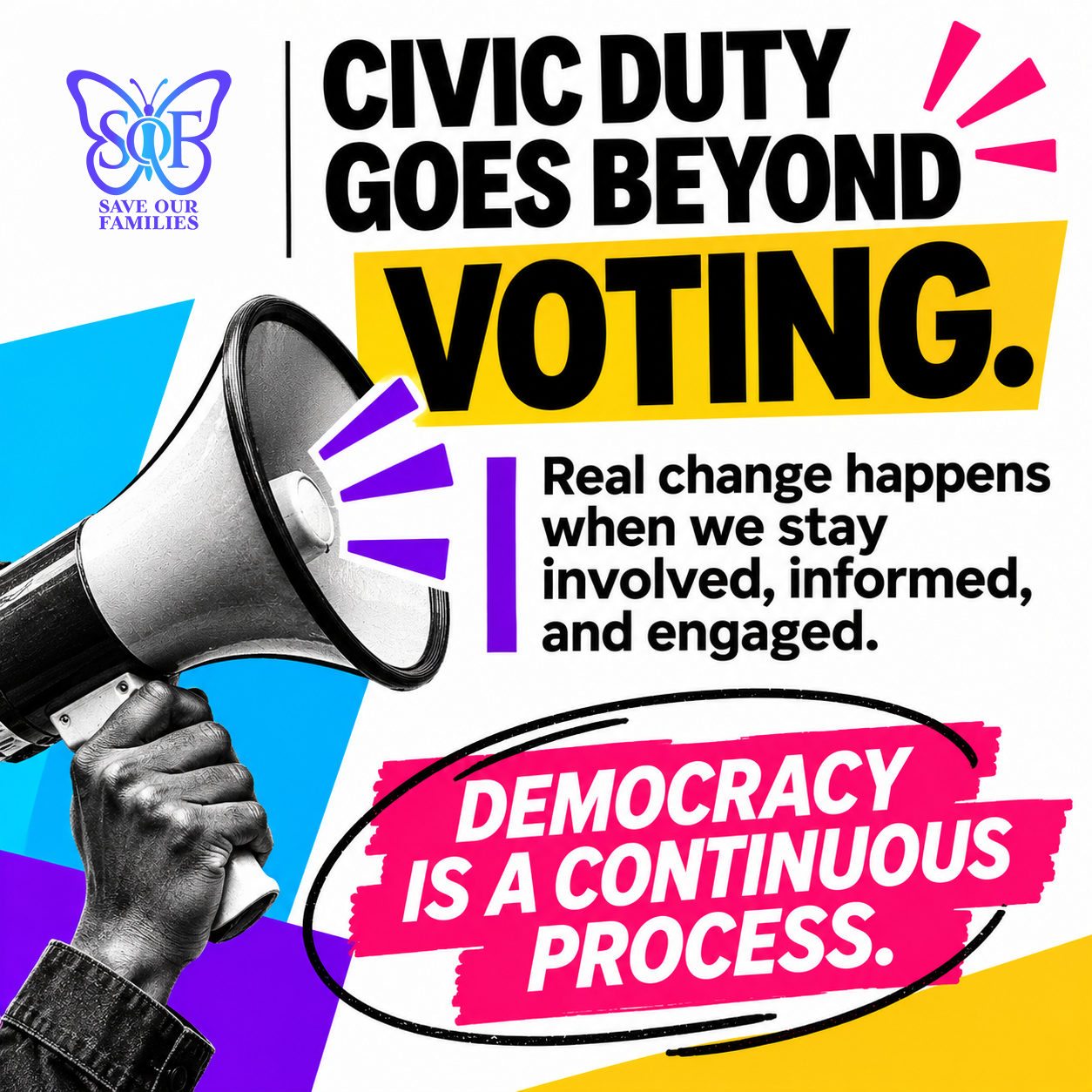
For generations, civic participation has been disproportionately framed around elections. We are encouraged to register, research candidates, cast ballots, and encourage others to do the same. These activities are important components of democratic participation. However, the emphasis on Election Day can unintentionally reinforce a dangerous misconception: that our civic responsibilities end once our ballots have been submitted.
Democracy is not simply the process of choosing representatives. It is the continuous practice of ensuring that public institutions remain responsive to the people they are intended to serve. Voting determines who occupies positions of public authority. Civic engagement influences how that authority is exercised. The distinction matters.
Civic Engagement Is More Than a Political Exercise
Civic participation is not exclusively a matter of politics. It is also a matter of public health, social connection, and community well-being.
The U.S. Department of Health and Human Services identifies civic participation as an important component of the social and community context influencing health. Participation can include voting, volunteering, community organizing, and involvement in local organizations. Research summarized through Healthy People 2030 associates civic participation with stronger social connections and various indicators of improved well-being (Office of Disease Prevention and Health Promotion [ODPHP], n.d.).
These connections are particularly relevant for communities experiencing persistent economic and social inequities.
Public decisions influence the availability of affordable housing, healthcare services, public transportation, education, neighborhood infrastructure, and community resources. These conditions are closely connected to the social determinants of health identified by the Centers for Disease Control and Prevention (CDC, 2026).
Consequently, civic engagement should not be viewed as an optional activity reserved for election years. It is one of the ways communities participate in shaping the conditions that influence their everyday lives.
From Campaign Promises to Public Accountability
Election campaigns revolve around promises, proposals, priorities, and competing visions for the future. Governing, however, requires something substantially different: implementation.
A campaign promise does not automatically become legislation. A legislative proposal does not guarantee funding. An approved budget does not necessarily translate into accessible services. Even well-intentioned policies can produce unintended consequences when implementation fails to account for the experiences of the communities they affect. This is where sustained civic participation becomes essential.
Residents have opportunities to communicate with elected representatives, monitor legislation, participate in public meetings, and examine how government resources are allocated. Federal, state, and local officials can be identified through official government directories, while the Ohio General Assembly provides public access to legislative information and bill-tracking resources (Ohio General Assembly, n.d.; USAGov, n.d.).
Accountability requires more than expressing dissatisfaction when something goes wrong. It requires asking informed questions before decisions are finalized, monitoring implementation afterward, and evaluating whether intended benefits actually reach the people who need them.
Instead of limiting our conversations to which candidates won or lost, we should also be asking:
What policies are being proposed? Who benefits? Who might be overlooked? What evidence supports the decision? How will success be measured?
These questions should remain relevant regardless of which political party holds public office.
Your Local Government Deserves Your Attention
National elections attract substantial attention, but many decisions affecting our daily lives take place much closer to home.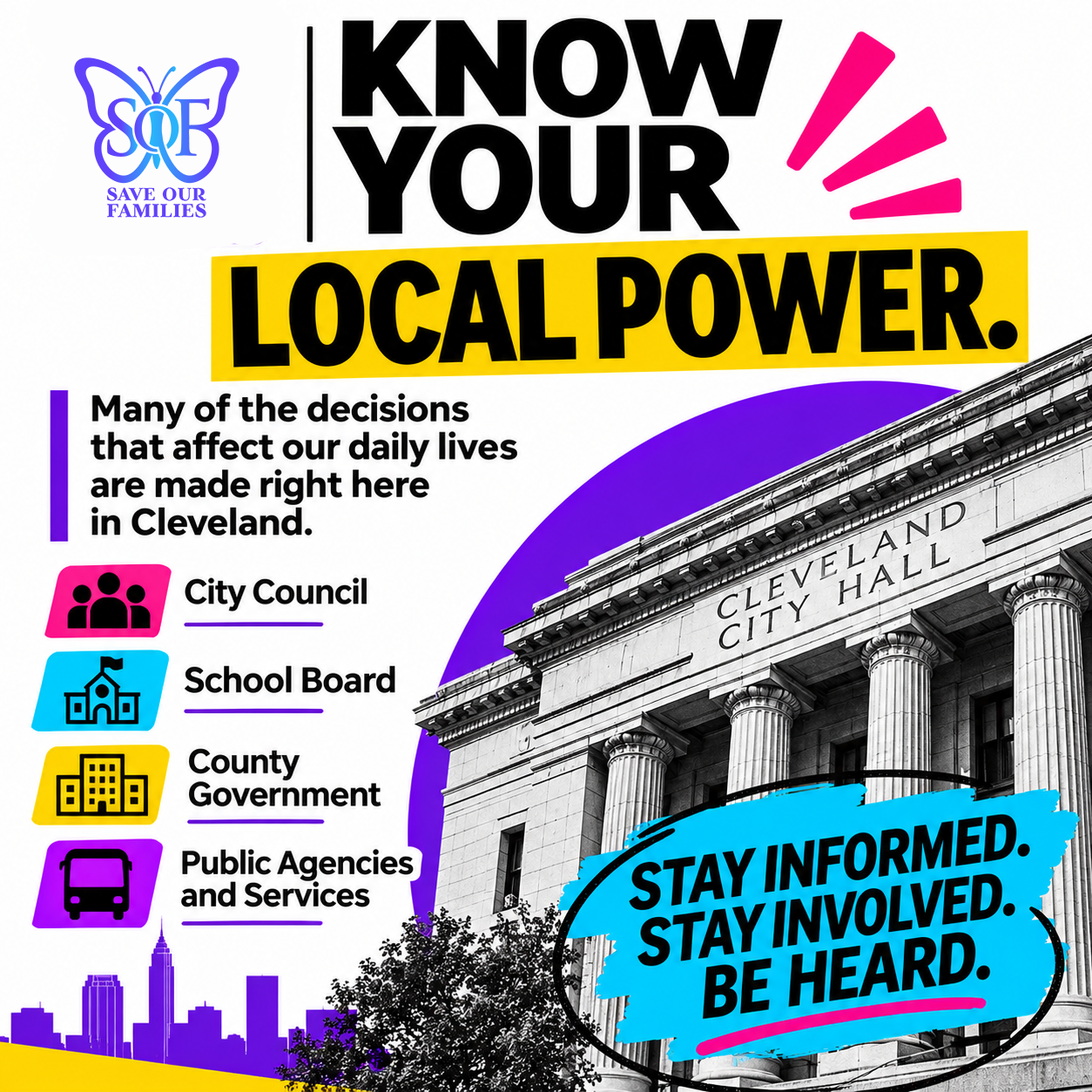
City councils, county governments, school boards, public agencies, and other local institutions make decisions that influence neighborhood development, public services, transportation, educational opportunities, and the distribution of public resources. Yet these decision-making processes frequently receive less public attention than national political debates.
For Cleveland residents, attending Cleveland City Council meetings or submitting public comments provides an opportunity to participate more directly in local government. Council maintains public-comment procedures, including preregistration requirements, that residents can review before participating (Cleveland City Council, n.d.).
Civic engagement does not require a political science degree, professional advocacy experience, or an extensive understanding of government operations. It begins with curiosity, access to reliable information, and a willingness to ask questions.
Residents can begin by identifying their representatives, following upcoming public meetings, reviewing legislative proposals, and learning which institutions have authority over issues affecting their neighborhoods.
Equally important, they can organize with neighbors and community organizations to communicate shared concerns and advocate for practical solutions.
Public participation should be accessible, not intimidating.
Government processes often involve complicated language, unfamiliar procedures, and meeting schedules that create barriers for working families, older adults, people with disabilities, and residents with limited transportation.
Making civic participation more accessible requires institutions to communicate clearly, provide meaningful accommodations, and create opportunities for residents to engage without unnecessary obstacles.
Community Care Is Civic Participation
At Save Our Families, we believe meaningful change requires more than identifying problems. It requires building relationships, strengthening community capacity, and creating systems of support that respond to people’s actual circumstances. Our community care model recognizes that individual well-being cannot be separated from the broader social conditions in which people live.
Providing food to a family experiencing insecurity is community care. Helping someone access healthcare is an example of community care. Supporting young people through mentorship and education is an act of community care. Ensuring residents understand the public decisions affecting their neighborhoods is also community care.
These activities may take different forms, but they share an important principle: communities are stronger when people have the resources, knowledge, relationships, and opportunities necessary to participate in shaping their futures.
This understanding also challenges the assumption that meaningful civic participation is limited to people who are eligible or able to vote. Young people, residents who face barriers to voting, and others excluded from electoral participation still have experiences, perspectives, and contributions that matter.
Democratic engagement should not begin and end with a person’s access to a ballot.
What Can We Do Over the Next 30 Days?
The period immediately following an election offers an opportunity to transform civic interest into sustained community participation.
During the first week, focus on understanding. Review reliable election information, identify your current representatives, and learn which offices will change leadership. Remember that unofficial election-night results are not the same as certified outcomes.
During the second week, focus on awareness. Identify one issue affecting your neighborhood. Research which public agency or governing body has authority over that issue. Review upcoming meetings, proposed legislation, or budget discussions.
During the third week, focus on engagement. Contact a representative, attend a public meeting, submit a question, or participate in a community discussion. Seek information about existing plans, available resources, and opportunities for public input.
During the fourth week, focus on collective action. Connect with a neighborhood organization, support a community initiative, volunteer, or organize a discussion about a shared concern.
These actions do not require everyone to share the same political beliefs. They require a shared understanding that public institutions have responsibilities to the communities they serve and that residents have an important role in shaping public priorities.
The objective is not constant political confrontation; it is informed, consistent, and constructive participation.
One Immediate Responsibility: Make Sure Your Ballot Counts
For Ohio residents who participated in the November 3, 2026, election, there is also an important time-sensitive consideration.
Ohio’s election process continues after Election Day. Some voters who cast provisional ballots or whose absentee ballots have certain deficiencies may need to provide additional information for their ballots to count.
According to the Ohio Secretary of State (2026), eligible voters who must resolve these issues generally have four days after Election Day. For this election, the correction period extends through Saturday, November 7, 2026.
Voters who believe their ballots may require attention should contact their county board of elections promptly for instructions. Democratic participation includes protecting the integrity of the process through which eligible votes are counted.
The Work Continues Between Elections
Elections are significant moments in democratic life, but they are not substitutes for the continuous work required to build healthy, equitable, and resilient communities. Progress depends on more than the individuals elected to public office. It also depends on informed residents, engaged neighborhoods, responsive institutions, accountable leadership, and community organizations willing to address challenges that cannot be resolved through legislation alone.
At Save Our Families, we believe civic engagement should be grounded in education, dignity, accountability, and collective responsibility. We encourage residents to remain informed, ask difficult questions, challenge ineffective systems, support their neighbors, and participate in the decisions that shape their communities.
Our responsibility is not to agree on every issue.
It is to recognize that meaningful democracy requires participation beyond a single day.
We voted. Now we pay attention.
We voted. Now we ask questions.
We voted. Now we organize, participate, and hold institutions accountable.
We voted. Now the work continues.
Because the strength of a democracy should not be measured solely by what happens on Election Day. It should also be measured by what communities are empowered to accomplish on every day that follows.
References
Centers for Disease Control and Prevention. (2026, June 9). Social determinants of health. CDC: Social determinants of health
Cleveland City Council. (n.d.). Public comment. Cleveland City Council: Public comment
Office of Disease Prevention and Health Promotion. (n.d.). Civic participation. Healthy People 2030. Healthy People 2030: Civic participation
Ohio General Assembly. (n.d.). Ohio Legislature. Ohio General Assembly
Ohio Secretary of State. (2026, November 3). Secretary LaRose outlines what happens after the polls close in Ohio. Ohio Secretary of State: Post-election process
USAGov. (n.d.). Find and contact elected officials. USAGov: Find and contact elected officials
about author

Created by the team at Save Our Families.
subscribe to our newsletter
Join the Save Our Families newsletter for updates on community care, mental health tools, healing stories, and events you won’t want to miss.
Note: We promise not to flood your inbox—just healing vibes, resources, and real talk.
Recent Posts
We Voted, The Real Election Work Starts Now.
The Election Is Over. Our Responsibility Is Not. On November 3rd, millions of Americans participated in an exercise that has become synonymous with democracy: voting. Some celebrated the results. Others experienced disappointment, uncertainty, or frustration. [...]
Safety Is a Right: When Domestic Violence and Stalking Intersect
No one should have to earn safety! Every person deserves relationships where their boundaries matter, their choices belong to them, and their home offers room to breathe. When someone uses fear, humiliation, isolation, surveillance, or [...]
National Self-Awareness Day: Reflection Without Judgment
National Self-Awareness Day: Reflection Without Judgment Every person carries an internal world shaped by emotions, needs, memories, values, habits, expectations, and relationships. Much of that world influences our decisions before we consciously recognize what is [...]

