
National Self-Awareness Day: Reflection Without Judgment
National Self-Awareness Day: Reflection Without Judgment
Every person carries an internal world shaped by emotions, needs, memories, values, habits, expectations, and relationships. Much of that world influences our decisions before we consciously recognize what is happening. We may react quickly, repeat familiar patterns, agree to something that violates a boundary, or withdraw without understanding why.
Self-awareness helps us slow that process down.
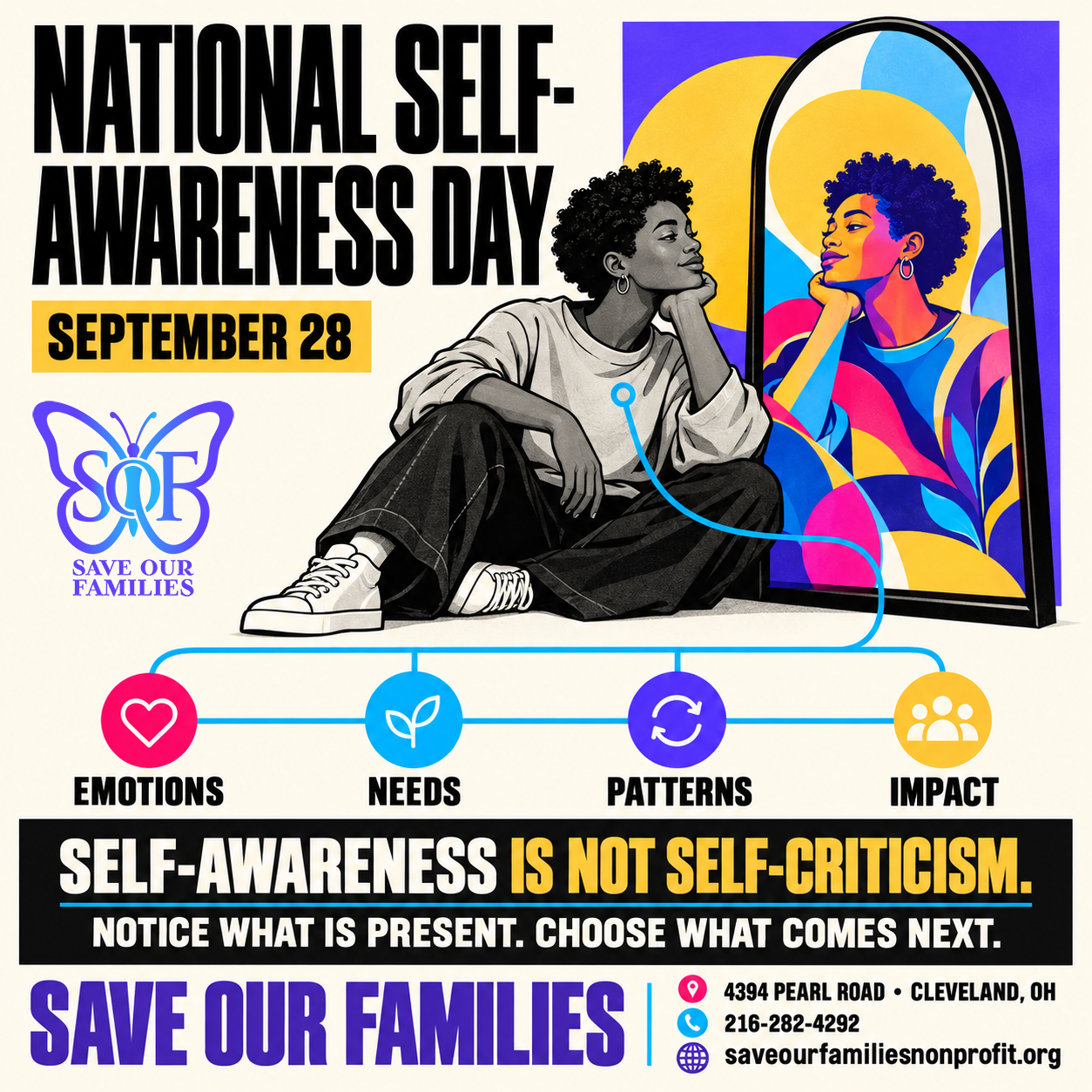
Observed on September 28, National Self-Awareness Day offers an opportunity to examine how we think, feel, respond, and affect others. It is not a demand to identify everything we dislike about ourselves. It is an invitation to become more honest, curious, and intentional.
Self-awareness is not self-criticism. It is the practice of noticing what is present so we can make informed choices about what comes next.
What Is Self-Awareness?
Self-awareness is the ability to recognize and examine our internal experiences while also understanding how our behavior affects the people and environments around us.
This includes awareness of our:
- Thoughts and beliefs
- Emotional responses
- Physical sensations
- Personal values
- Needs and motivations
- Strengths and limitations
- Habits and behavioral patterns
- Boundaries
- Communication style
- Impact on other people
Researchers have described self-awareness as both an internal and interpersonal process. It involves understanding what is happening within us and recognizing how our words, reactions, and decisions are experienced by others. It is not a fixed personality trait. It can develop through attention, reflection, observation, experience, and feedback over time (Carden et al., 2022).
Self-awareness is therefore more than knowing our preferences or describing our personality. It requires us to notice the relationship between what we experience internally and what we do externally.
A person may know that they become quiet during conflict. Deeper self-awareness asks additional questions: What emotion appears before I become quiet? What am I trying to protect? What does my silence communicate to someone else? Is this response helping me, or is it repeating an older survival pattern?
Those questions create room for choice.
Self-Awareness Is Not the Same as Self-Judgment
Reflection becomes harmful when it turns into an internal trial where every feeling becomes evidence of failure.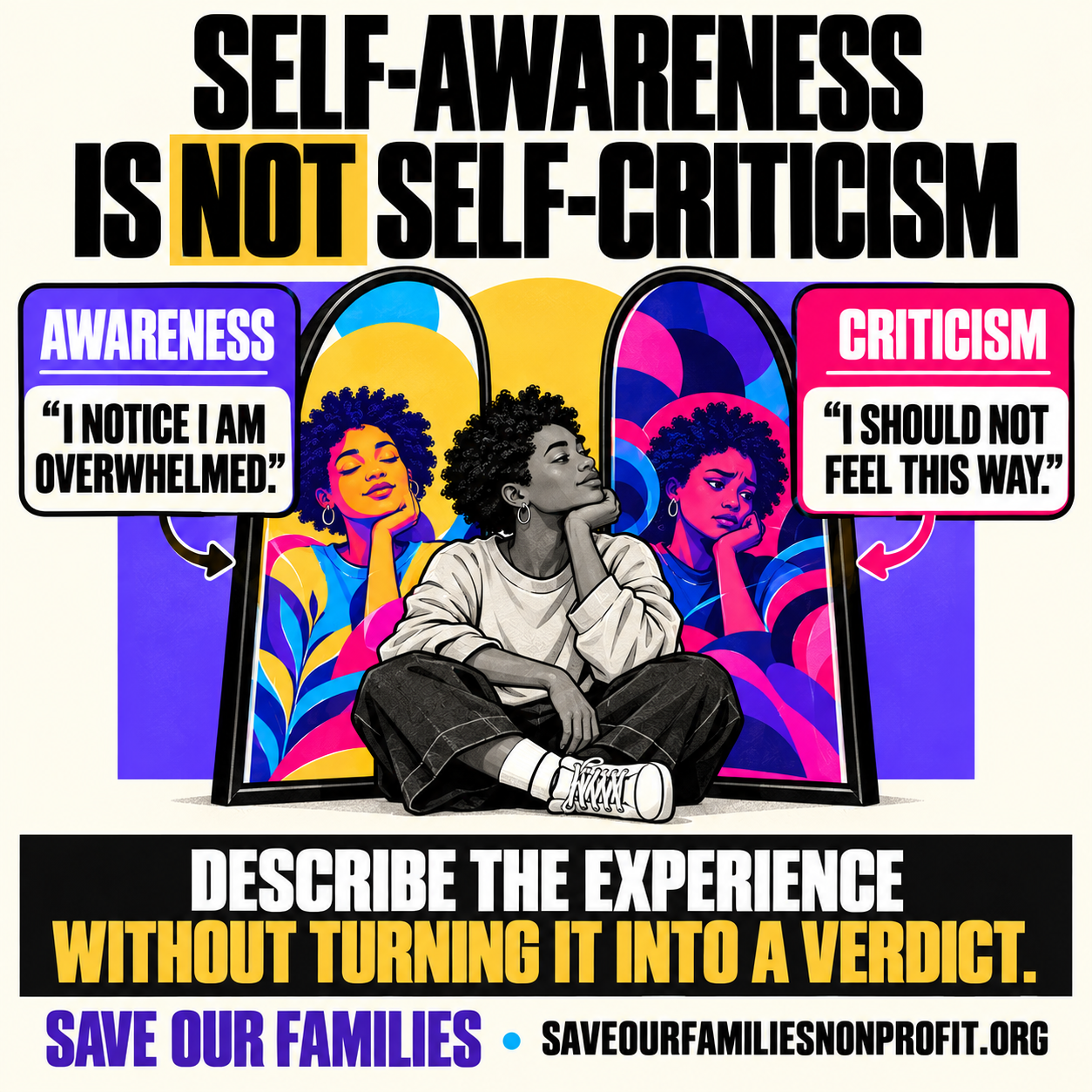
Self-judgment sounds like:
- “I should not feel this way.”
- “I always ruin things.”
- “Something must be wrong with me.”
- “I should have handled that perfectly.”
- “I will never change.”
Self-awareness sounds different:
- “I notice that I am becoming overwhelmed.”
- “I reacted more strongly than I intended.”
- “This situation may have touched an older wound.”
- “I need time before I respond.”
- “I can take responsibility and still treat myself with compassion.”
The difference is not avoidance. Self-awareness does not excuse harmful behavior or eliminate accountability. It allows us to examine behavior without reducing our entire identity to one decision, reaction, or mistake.
That distinction matters because people are more likely to learn when they can examine an experience clearly. Shame often narrows attention toward personal defect. Constructive reflection directs attention toward understanding, responsibility, repair, and change.
Internal and External Self-Awareness
Self-awareness has two connected dimensions.
Internal self-awareness
Internal awareness concerns how clearly we recognize our own emotions, thoughts, needs, values, motivations, strengths, limitations, and behavioral patterns.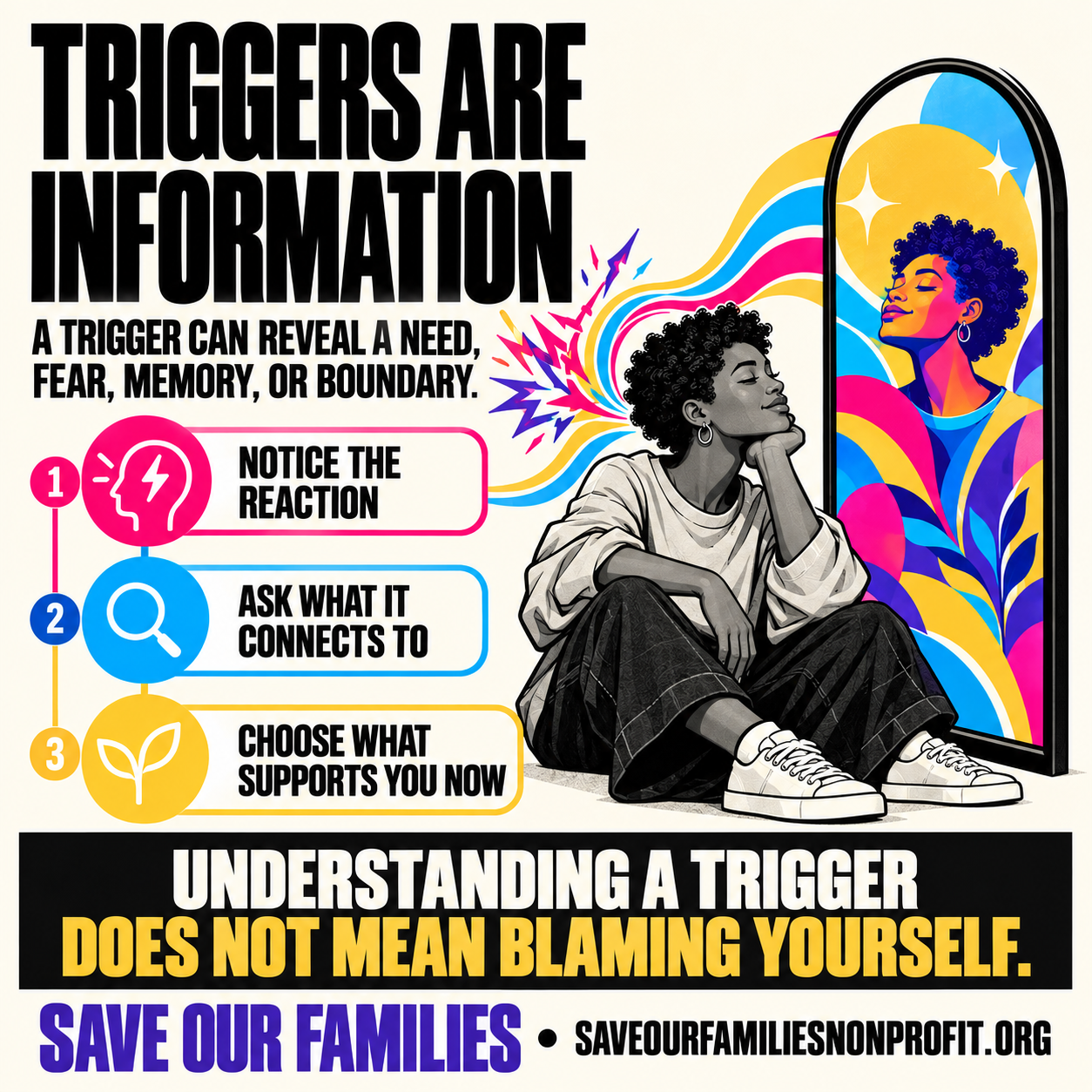
It may include recognizing:
- The difference between anger and hurt
- When exhaustion is affecting patience
- Which environments increase anxiety
- When a boundary has been crossed
- Why a particular comment feels threatening
- Which values are guiding a major decision
- What support is needed before a situation becomes a crisis
Emotional awareness is especially important. Research suggests that the ability to identify and understand emotional experiences supports emotion regulation, navigation of complex social situations, and healthier relationships (Lane & Smith, 2021).
External self-awareness
External awareness concerns how accurately we understand our impact on other people.
Our intentions matter, but they do not erase impact. A person may intend to be direct while others experience their communication as dismissive. Someone may believe they are protecting a loved one while their behavior feels controlling. A leader may think they are encouraging independence while providing too little guidance.
External self-awareness requires listening to feedback without automatically treating it as either an attack or an unquestionable truth. Feedback is information. We can examine it, compare it with our values and patterns, and decide what responsibility or adjustment is appropriate.
Why Self-Awareness Matters
Self-awareness does not guarantee that every decision will be healthy or every relationship will be easy. It does, however, improve our ability to recognize what is influencing us.
Research on self-awareness has associated it with outcomes involving communication, self-understanding, decision-making, confidence, and awareness of one’s impact on others. At the same time, researchers caution that self-awareness is a complex construct and that popular claims sometimes exceed the available evidence (Sutton, 2016).
In everyday life, self-awareness can help us:
- Identify emotions before they control our behavior
- Communicate needs more clearly
- Establish and maintain boundaries
- Recognize when stress is changing how we respond
- Notice recurring relationship patterns
- Separate present circumstances from past experiences
- Understand when we need rest, information, support, or professional care
- Accept feedback with greater stability
- Make decisions that are more consistent with our values
- Repair harm after recognizing our impact
Self-awareness is also important for communities. Families, organizations, and institutions are shaped by the choices of individuals. When people can recognize defensiveness, bias, fear, power, and unresolved conflict, they are better positioned to interrupt patterns that might otherwise continue across relationships or generations.
The Difference Between Reflection and Rumination
Looking inward is not automatically helpful.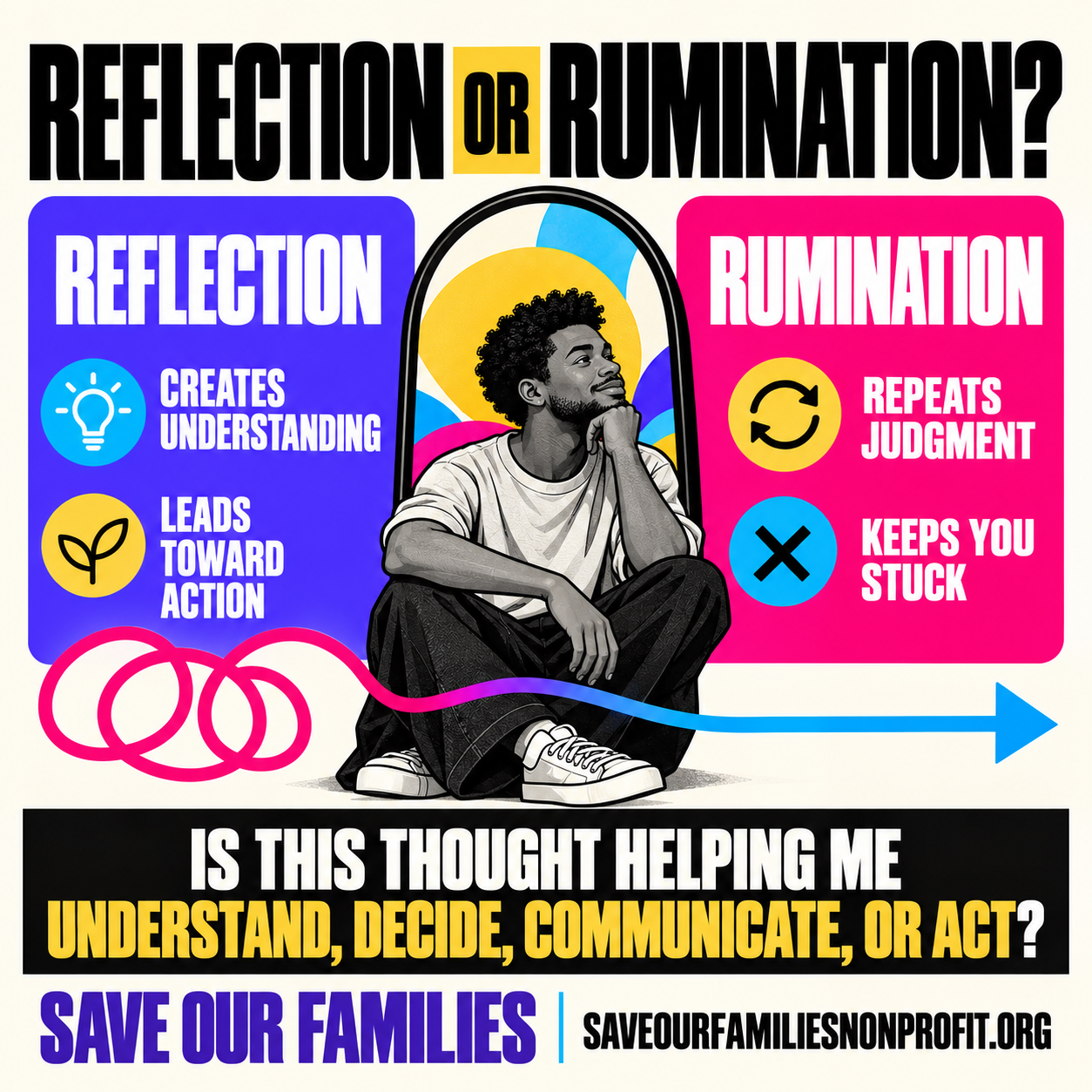
Reflection becomes rumination when thinking becomes repetitive, passive, self-punishing, and disconnected from action. Instead of producing clarity, rumination may repeatedly return a person to the same painful questions:
- Why am I like this?
- Why does this always happen to me?
- What is wrong with me?
- Why can I never get anything right?
Research distinguishes constructive reflection from brooding, a more self-judging form of repetitive thought. Adaptive reflection tends to create perspective, meaning, acceptance, or a possible next step. Brooding tends to keep attention fixed on distress, personal inadequacy, or an unchangeable past (Cova et al., 2019).
A useful question is: Is this reflection helping me understand, decide, communicate, or act?
If the answer is no, consider changing the process. Step away from the journal. Move your body. Speak with someone trustworthy. Focus on a specific question. Identify one action that is within your control. If reflection consistently increases distress or interferes with daily life, support from a qualified mental health professional may be appropriate.
The goal is not endless self-analysis. The goal is greater clarity and more intentional action.
A Four-Part Self-Awareness Practice
Self-awareness can be practiced in ordinary moments. One simple method is to pause, notice, name, and choose.
1. Pause
Create a small space between the experience and your response.
A pause may last ten seconds, ten minutes, or an entire evening. It may involve taking a breath, placing both feet on the ground, stepping away from a conversation, or delaying a decision until your emotions settle.
The pause is not avoidance. It is preparation.
2. Notice
Observe what is happening without immediately trying to change it.
Ask:
- What thoughts are moving through my mind?
- What emotions are present?
- What sensations do I notice in my body?
- What happened immediately before this reaction?
- What urge do I have right now?
- What am I assuming about this situation?
Try to collect information before creating an explanation.
3. Name
Use specific language to describe the experience.
Instead of saying, “I feel bad,” consider whether you feel disappointed, rejected, embarrassed, afraid, overstimulated, lonely, resentful, powerless, or exhausted.
Specific language can make an experience easier to understand. “I am angry” provides some information. “I am angry because I felt dismissed after asking for help” provides more.
Naming does not mean that an interpretation is automatically correct. It gives you something clearer to examine.
4. Choose
Ask what response is consistent with your values, needs, responsibilities, and long-term well-being.
You might choose to:
- Ask for clarification
- Communicate a boundary
- Apologize
- Request support
- Delay a major decision
- Correct an inaccurate assumption
- Leave an unsafe situation
- Rest before continuing
- Seek professional guidance
- Take one manageable next step
The most emotionally immediate response is not always the response that best serves us.
Questions for Deeper Reflection
Self-awareness grows through better questions, not harsher judgment.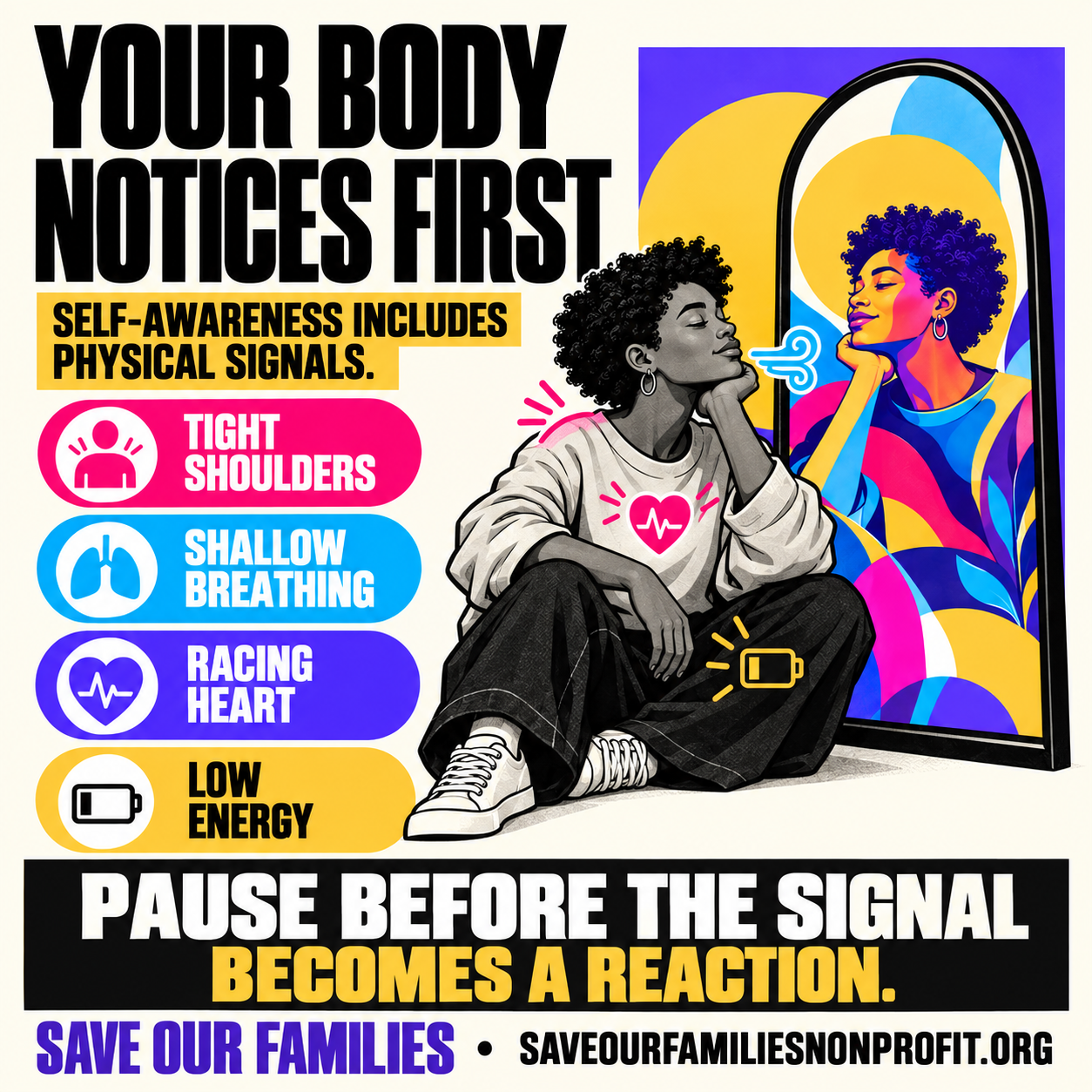
Emotions
- What am I feeling beneath my first reaction?
- Which emotion is easiest for me to express?
- Which emotions do I avoid, minimize, or disguise?
- What happens in my body when I feel threatened or overwhelmed?
Needs
- What do I need but have not communicated?
- Am I seeking connection, reassurance, control, rest, safety, recognition, or space?
- Is this a need I can meet myself, a need I should communicate, or both?
Patterns
- What situations repeatedly activate the same response?
- What do I do when I fear rejection, failure, conflict, or loss?
- Which patterns once protected me but now create problems?
- What usually happens immediately before I abandon a boundary?
Values
- What matters most to me in this situation?
- Does my behavior reflect the values I say I hold?
- Am I making this decision from conviction, fear, pressure, or habit?
Impact
- How might another person experience my behavior?
- Am I listening to understand or listening to defend myself?
- What feedback have I received repeatedly?
- Is there harm I need to acknowledge or repair?
Strengths
- What have I handled well?
- Which abilities have helped me survive, adapt, or grow?
- What evidence challenges the harshest story I tell about myself?
- Where have I already demonstrated change?
Self-awareness should include strengths. A reflection process that documents only weaknesses is incomplete.
Practicing Self-Awareness in Families and Communities
Self-awareness is often presented as an individual exercise, but it develops within relationships.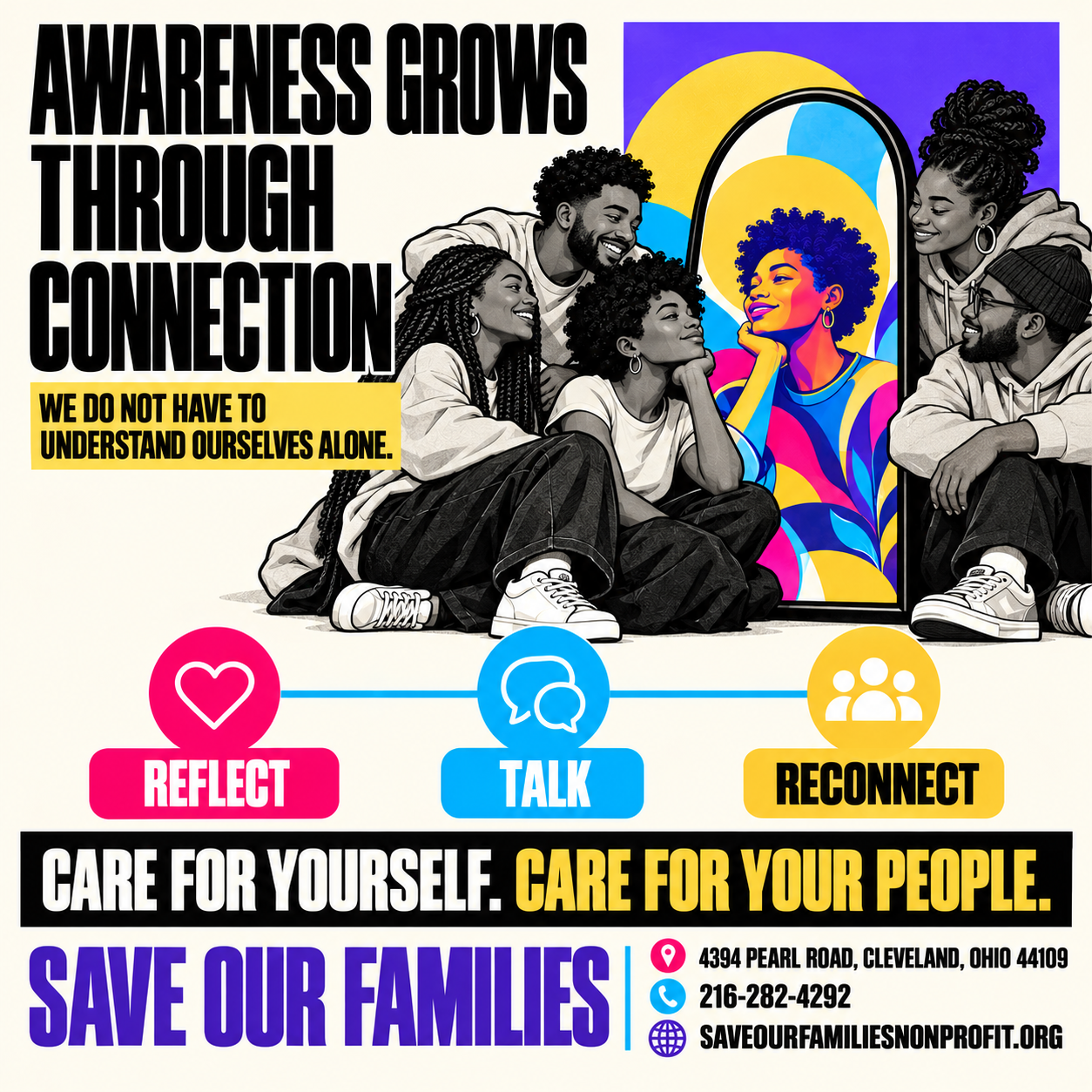
People learn to understand themselves partly through the responses, expectations, language, and safety provided by others. Families and communities can support self-awareness by making room for honest emotion without humiliation, accountability without abandonment, and feedback without cruelty.
This may look like:
- Asking questions before making assumptions
- Allowing people time to regulate before continuing a conflict
- Teaching children language for emotions and needs
- Respecting clearly communicated boundaries
- Acknowledging the impact of our behavior
- Apologizing without demanding immediate forgiveness
- Recognizing that culture and lived experience shape emotional expression
- Avoiding labels that reduce people to a diagnosis, mistake, or difficult season
- Connecting people with support when a need exceeds what family or friends can provide
A community-care model recognizes that personal growth does not happen through willpower alone. People need relationships, resources, opportunities, safety, and spaces where reflection can occur without shame.
A Practice, Not a Final Destination
No one becomes completely self-aware.
We all have blind spots. Stress can narrow our perspective. Trauma can influence what feels dangerous. Power can make feedback easier to dismiss. Shame can make responsibility feel unbearable. Familiar patterns can operate before we recognize them.
The goal is not perfect insight. The goal is a growing capacity to notice, understand, and respond with greater intention.
On National Self-Awareness Day, consider taking five quiet minutes to ask:
What is present within me right now? What is it asking me to understand? What response would reflect the person I am working to become?
Reflection does not require punishment. Accountability does not require self-rejection. Growth begins when we become willing to see ourselves clearly and respond with courage, compassion, and care.
References
Carden, J., Jones, R. J., & Passmore, J. (2022). Defining self-awareness in the context of adult development: A systematic literature review. Journal of Management Education, 46(1). https://doi.org/10.1177/1052562921990065
Cova, F., Garcia, F., Oyanadel, C., Villagran, L., Páez, D., & Inostroza, C. (2019). Adaptive reflection on negative emotional experiences: Convergences and divergence between the processing-mode theory and the theory of self-distancing reflection. Frontiers in Psychology, 10, Article 1943. https://doi.org/10.3389/fpsyg.2019.01943
Lane, R. D., & Smith, R. (2021). Levels of emotional awareness: Theory and measurement of a socio-emotional skill. Journal of Intelligence, 9(3), Article 42. https://doi.org/10.3390/jintelligence9030042
Sutton, A. (2016). Measuring the effects of self-awareness: Construction of the Self-Awareness Outcomes Questionnaire. Europe’s Journal of Psychology, 12(4), 645–658. https://doi.org/10.5964/ejop.v12i4.1178
about author

Created by the team at Save Our Families.
subscribe to our newsletter
Join the Save Our Families newsletter for updates on community care, mental health tools, healing stories, and events you won’t want to miss.
Note: We promise not to flood your inbox—just healing vibes, resources, and real talk.
Recent Posts

Safety Is a Right: When Domestic Violence and Stalking Intersect
No one should have to earn safety! Every person deserves relationships where their boundaries matter, their choices belong to them, and their home offers room to breathe. When someone uses fear, humiliation, isolation, surveillance, or [...]
National Self-Awareness Day: Reflection Without Judgment
National Self-Awareness Day: Reflection Without Judgment Every person carries an internal world shaped by emotions, needs, memories, values, habits, expectations, and relationships. Much of that world influences our decisions before we consciously recognize what is [...]
Preparedness Is Community Care: Building Safety Before an Emergency Happens
Preparedness Is Community Care: Building Safety Before an Emergency Happens Every September, National Preparedness Month calls attention to a simple but consequential truth: emergencies rarely provide enough time to begin planning after they arrive. Severe [...]

