Equity, Access, and Community Power
Health and opportunity are shaped by more than individual decisions. Policies, funding practices, stigma, discrimination, transportation, neighborhood resources, and institutional trust all influence whether people can reach the support they need.
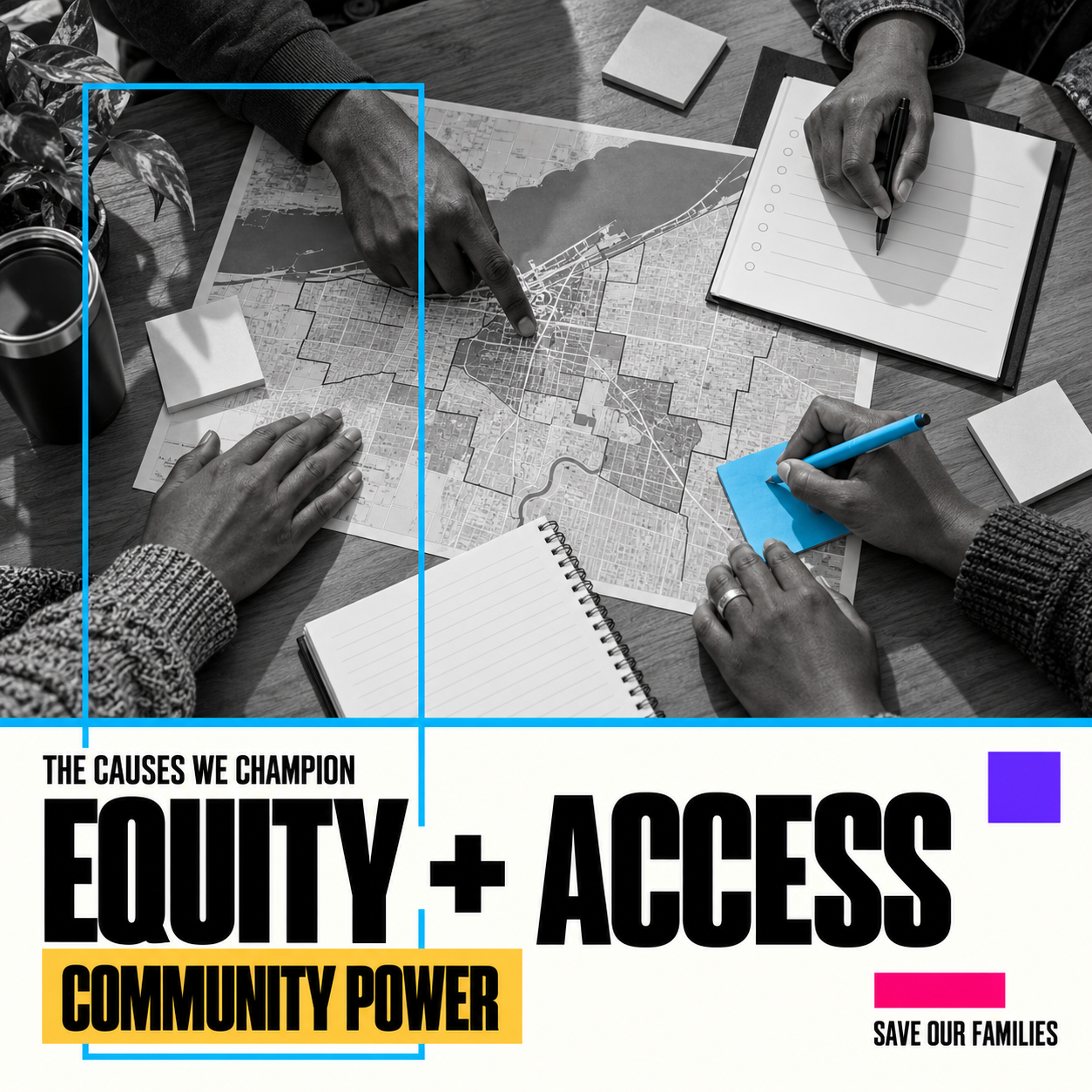
Save Our Families advances community health equity in Cleveland by strengthening grassroots leadership, educating residents, elevating lived experience, and advocating for systems that respond to communities with fairness, transparency, and respect.
Our work challenges institutions that expect communities to survive recurring crises without meaningful decision-making power, sustainable investment, or a voice in the solutions.
At a glance: Save Our Families connects community knowledge with public education, grassroots advocacy, civic engagement, and institutional accountability. We work to make programs, policies, and funding systems more accessible to the people and organizations closest to community needs.
Access is shaped by systems
People do not make health decisions in isolation.
A service may technically exist yet remain inaccessible due to transportation barriers, limited hours, complex paperwork, cost, disability access, language barriers, fear of discrimination, or a lack of trust in the institution providing it.
Communities may also be expected to address major health and social challenges, while grassroots organizations receive short-term funding, delayed reimbursements, restrictive grants, and administrative requirements that exceed their capacity.
Equity requires more than offering the same resource to everyone. It requires understanding the barriers different communities face and changing the conditions that prevent people from benefiting equally.
From community input to institutional change
Lived experience is a form of expertise. It should influence how programs are designed, funded, implemented, and evaluated.
Save Our Families works to translate community knowledge from listening into decisions. This includes documenting recurring barriers, translating complex information into accessible language, preparing residents to participate in public processes, and bringing community-informed recommendations to institutions and decision-makers.
Our approach includes:
- Listening to residents and frontline organizations.
- Identifying patterns across individual experiences.
- Providing accessible education about policies, funding, and public systems.
- Supporting residents who want to speak, organize, or participate.
- Advocating for transparent and equitable institutional practices.
- Building partnerships that connect community knowledge with decision-making power.
- Following up on commitments and identifying where accountability is still needed.
What equity looks like in practice
Equitable systems should:
- Make services easy to find, understand, and access.
- Reduce unnecessary paperwork and administrative barriers.
- Include residents early in planning and decision-making.
- Compensate community expertise when resources permit.
- Use both credible data and lived experience.
- Offer clear explanations for funding and policy decisions.
- Provide meaningful opportunities for smaller grassroots organizations.
- Address transportation, disability access, stigma, and institutional mistrust.
- Measure whether resources reach the communities they were intended to serve.
- Report progress, limitations, and unmet commitments honestly.
Equity is not achieved through representation alone. Communities must have influence over priorities, resources, implementation, and accountability.